Then & now
How bras have changed
Museum garments, patents and old fitting advice set beside what today’s bras offer — materials, fastenings, sizing, support, comfort, fit and care.
Materials
Then · 1660s–1950s
Linen, wool and silk, stiffened with whalebone (baleen) in narrow stitched channels; later steel busks, leather facings and brass eyelets. In the 1920s rayon arrived; in the 1930s, the stretch yarn Lastex; and in 1939, nylon — briefly, before it went to war.
Now
Most bras are made from polyamide (nylon) or polyester blended with elastane (Lycra), often with moulded foam or spacer cups. Breathable microfibres date from the 1990s, and cotton-rich bras are recommended for sensitive skin after surgery.
Sources for materials
Fastenings
Then · 1780s–1930s
Stays and corsets laced at the back (or front) through eyelets, with a front busk; a 1883 corset fastened with loops and studs on a steel spoon busk. Early brassieres tied or hooked — some even hooked onto the corset — and one 1930s bra adjusted with two rows of pearl buttons.
Now
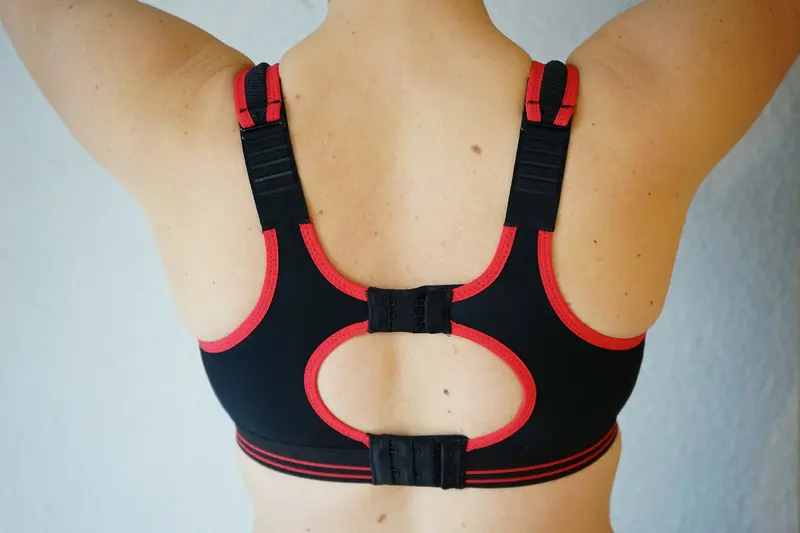
Hook-and-eye fastenings with several rows, adjustable sliders on the straps, and front fastenings for people who find reaching behind difficult. Some sports bras have clips that convert the straps to a racerback, crossover straps, or padded hook-and-eye panels.
Sources for fastenings
Sizing
Then · 1930s–1950s
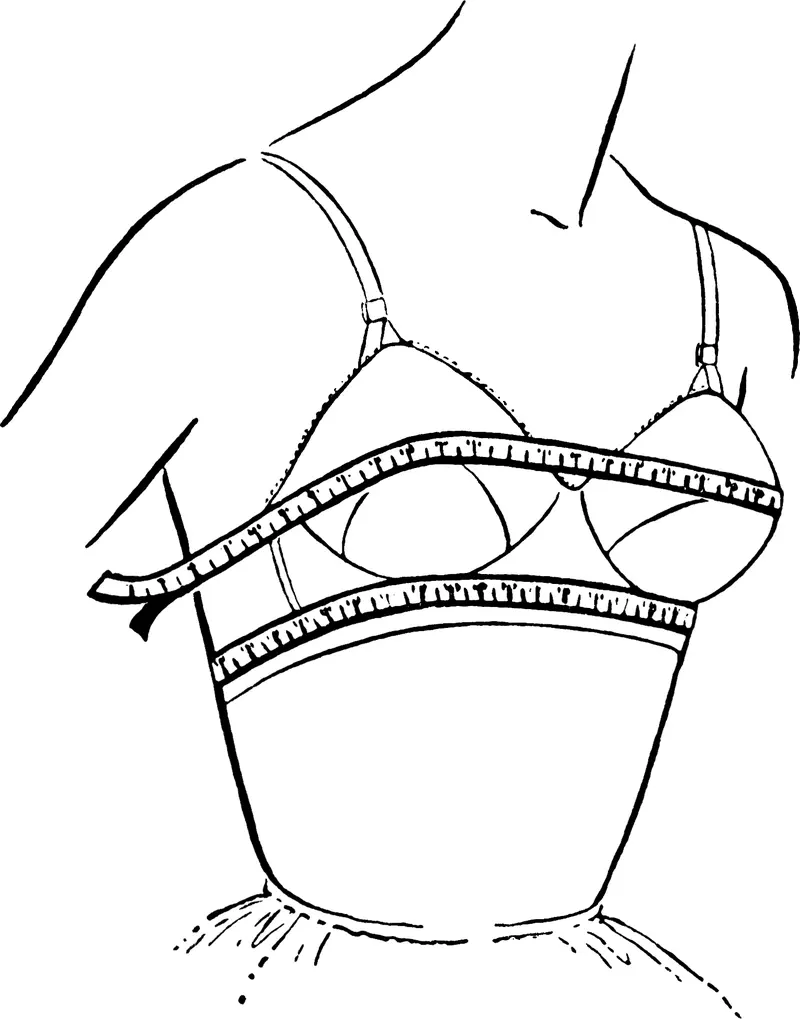
Graded cup sizes only appeared in the 1930s — small, average and full; then letters A to D. In Britain many cups were still labelled “medium” or “average” in the late 1950s, and a 1958 booklet advised adding 5 inches to the underbust measurement to find the band size.
Now
UK sizes pair a band (28, 30, 32…) with a cup letter that runs on with doubles: D, DD, E, F, FF, G, GG, H… up to K and beyond. Triumph’s guide rounds the snug underbust to the nearest even inch — no inches added — and works out the cup from the difference to the bust.
Sources for sizing
Support
Then · Before 1977
Support came from the whole torso — stays and corsets shaped the body from bust to hips. Separate cups arrived in the late 1920s, underwires in 1931 (common in Britain only after the war), and there was no purpose-made sports bra until 1977.
Now
Support comes mainly from the band, with the straps playing a smaller part. Sports bras are graded by impact level, and laboratory research measures how well they reduce breast movement.
Sources for support
Comfort
Then · 1880s–1950s
Rigid corsets and, later, heavily wired and boned 1950s bras could dig in over a long day; early underwires were padded or covered with velvet where they touched the skin. In the late 1950s and 1960s, advertisers promised “freedom”.
Now
Non-wired styles, bralettes, soft moulded cups, wide wings and padded straps all aim at comfort — but good fit still matters more than any single feature.
Sources for comfort
Fit and fitting
Then · 1700s–1950s
Georgian stays were custom-made to the wearer. Mass production brought standard sizes; Lastex in the 1930s helped bodies between sizes, and mid-century booklets taught women to measure themselves.
Now
Retailers offer fittings in shops and by video. Some fitters measure with a tape; others, such as Bravissimo, fit by eye. Either way, fit varies between brands and styles — try on, and use sister sizes.
Sources for fit and fitting
Care
Then · 1900s–1960s
Before synthetics, underwear was often boil-washed and scrubbed. With nylon came new care booklets — Triumph’s told customers there was no need for boil-washing or hours of drying.
Now
Most brands recommend gentle washing: by hand in cool water, or a cool delicates cycle in a mesh bag if the label allows, then drying away from direct heat. Always follow the care label.