History
The history of the bra
Two thousand years of supporting, shaping and sometimes squeezing the body — from Roman athletes to research laboratories. Every entry links to the museum record, patent or history we used.
The timeline
On a wide screen, scroll sideways or use the arrows. Dates marked “c.” are approximate.
-
Early 4th century AD
Roman athletes in the strophium
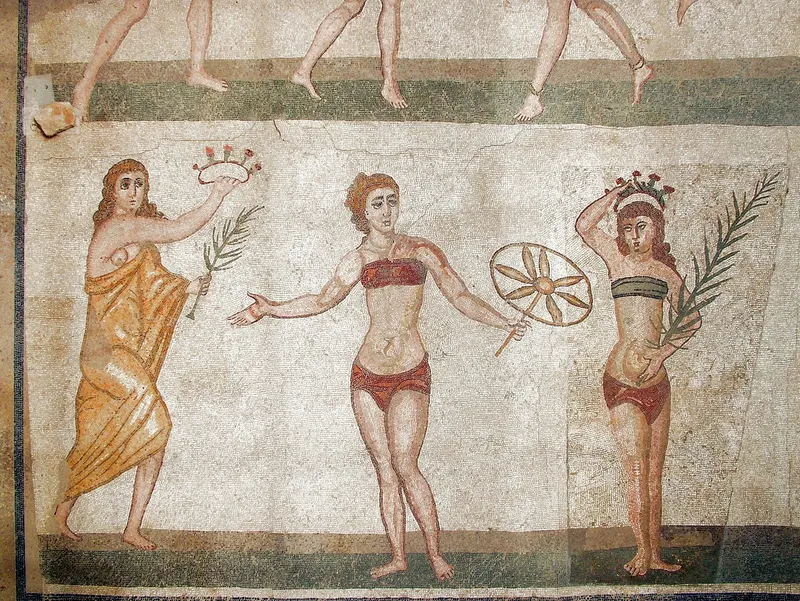
Photo: Clemensfranz, CC BY 2.5 A floor mosaic in the Villa Romana del Casale, Sicily, shows young women exercising in a breastband the Romans called a strophium, worn with a loincloth called a subligaculum.
Source: Ancient World Magazine
-
15th century
Linen bras in an Austrian castle

Photo: Johann Jaritz, CC BY-SA 3.0 at Excavations at Lengberg Castle, East Tyrol, from 2008 found four linen garments with distinct cups, some trimmed with needle lace. Radiocarbon dating confirmed they are fifteenth century.
Source: University of Innsbruck
-
Early 16th century
Stiffened bodices
Some form of stiffening becomes part of how a woman’s gown is made — built into the bodice, or worn as separate “stays” beneath.
Source: V&A
-
1603
Elizabeth I’s effigy corset
The original corset from Queen Elizabeth I’s 1603 funeral effigy was found to survive when the effigy was restored in 1995. It is displayed at Westminster Abbey.
Source: Westminster Abbey
-
1660–80
Silk stays with a separate busk
Front-lacing stays of pink watered silk in the V&A are fully boned with whalebone — in fact baleen, the filter plates of whales — and worn with a separate stiffening busk.
Source: V&A
-
1780s
The inverted cone
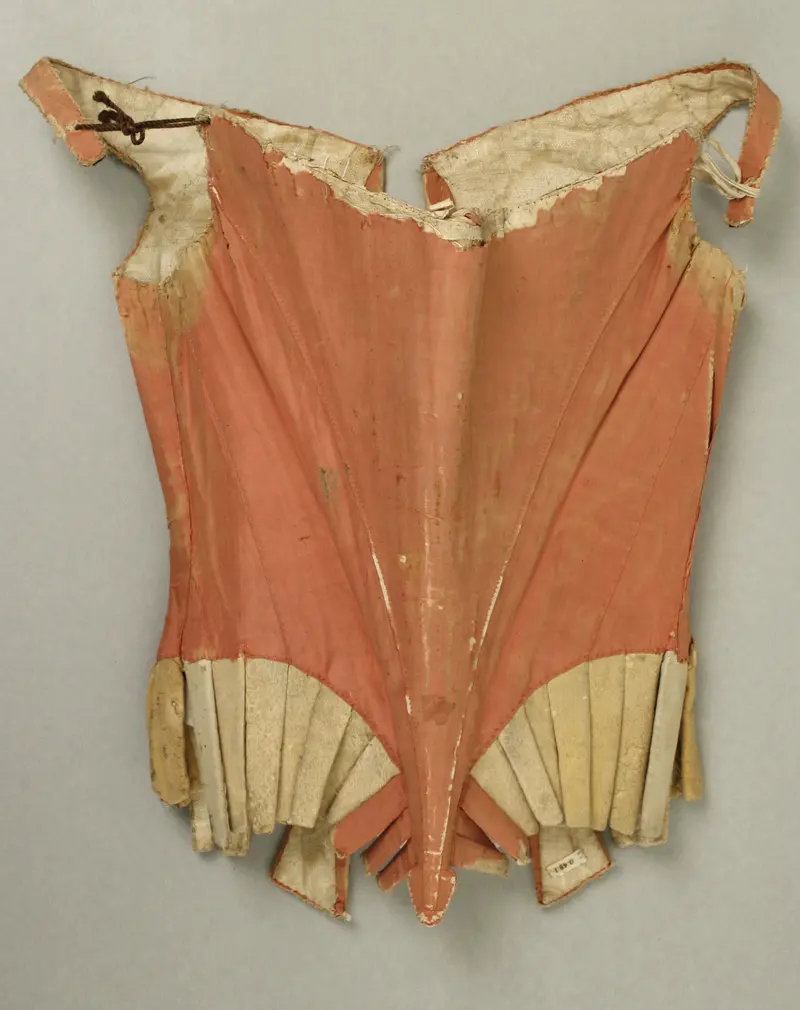
Photo: The Metropolitan Museum of Art, CC0 Stays of the 1780s give a smooth, firm cone-shaped torso rather than emphasising the bust; their whalebone softens with body heat and moulds to the wearer.
Source: V&A
-
1795
“Corset” becomes the polite word
Around this time “corset” starts to be used as a refined name for stays. New, lighter stays with gussets begin to support the breasts.
Source: V&A
-
c. 1820
A cotton bust bodice
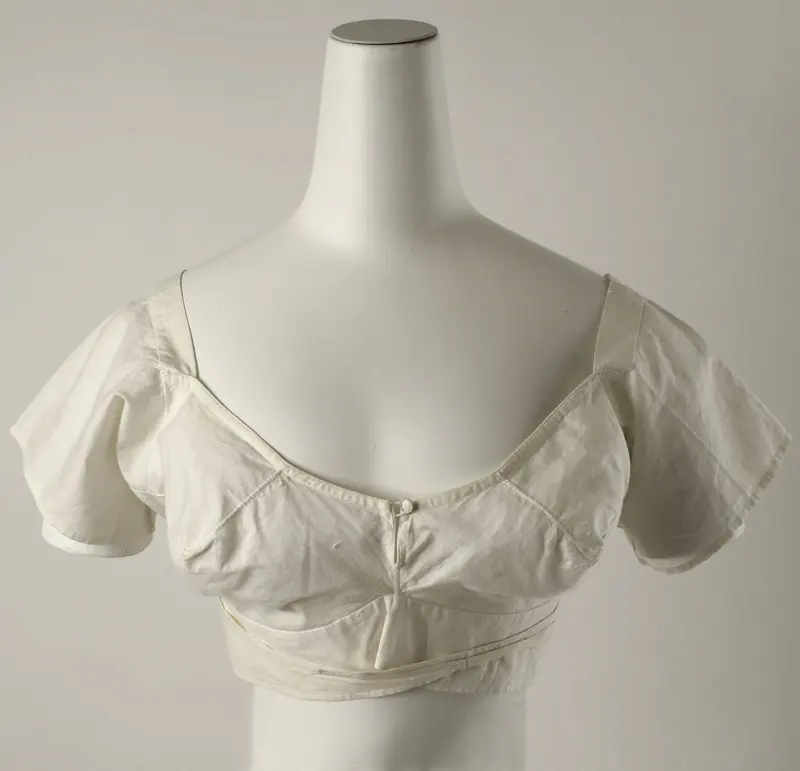
Photo: The Metropolitan Museum of Art, CC0 A short-sleeved cotton bodice of about 1820 in the Metropolitan Museum of Art is catalogued as a “brassiere” — a reminder that shaped bust supports existed long before the word.
-
Early 1870s
Bustles and longer corsets
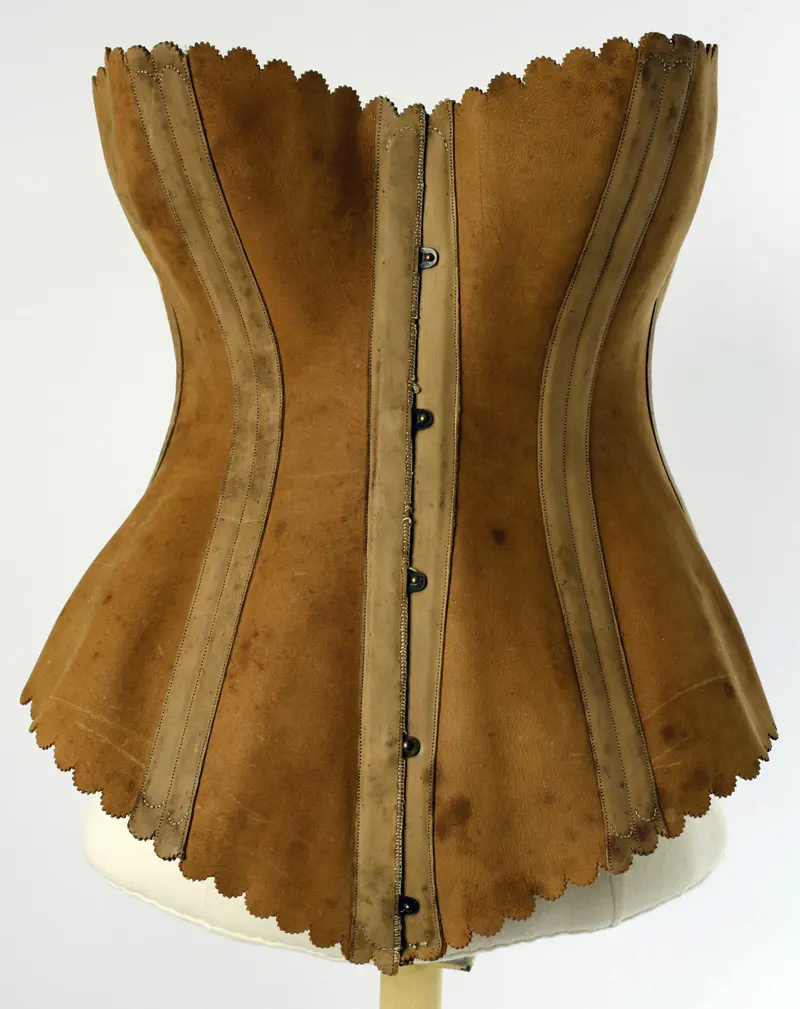
Photo: The Metropolitan Museum of Art, CC0 As the bustle replaces the crinoline, corsets grow much longer and more rigid, often with a steel busk at the front and brass eyelets at the back.
Source: V&A
-
1876
Olivia Flynt’s bust supporter
A Boston dressmaker patents a “bust supporter” meant to preserve the figure “without lacing or otherwise injuriously pressing or binding the body”.
Source: Invention & Technology
-
1888
Aertex
The cellular fabric Aertex is invented in the UK. Breathable and warm, it is later used for bust bodices sold as healthy alternatives to corsetry.
Source: The Underpinnings Museum
-
1889
Cadolle’s corselet-gorge
According to Maison Cadolle, Herminie Cadolle shows a corset “cut in half” — with a separate upper part supporting the breasts — at the 1889 Universal Exhibition in Paris.
Source: Maison Cadolle
-
1893
Marie Tucek’s breast supporter
US patent 494,397: a shaped plate with pockets for the breasts, held by shoulder straps crossing at the back and fastened with hooks and eyes at the front.
Source: Google Patents
-
1897
“Brassiere” enters English
The word is borrowed from the French brassière. The short form “bra” follows by 1923.
Source: Online Etymology Dictionary
-
1901
Bust girdles by post
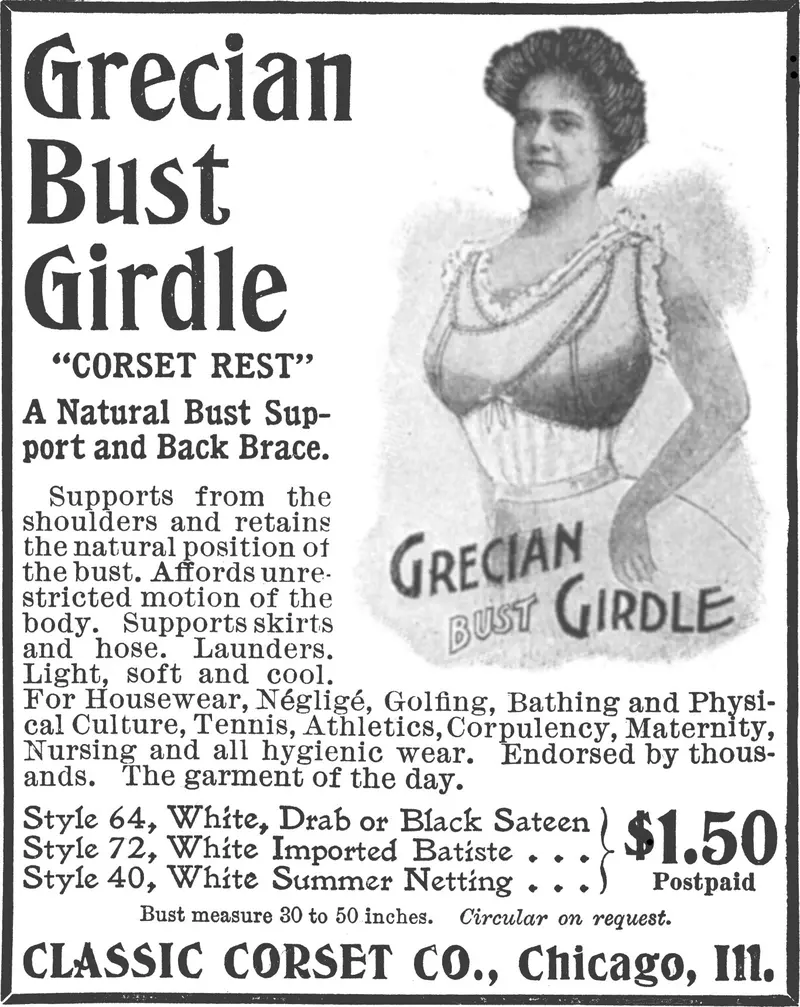
Photo: Classic Corset Co. advertisement, The Delineator, Public domain Magazine advertisements offer bust supports worn from the shoulders, such as the “Grecian Bust Girdle”, sold as an alternative or companion to the corset.
-
1914
Mary Phelps Jacob’s patent
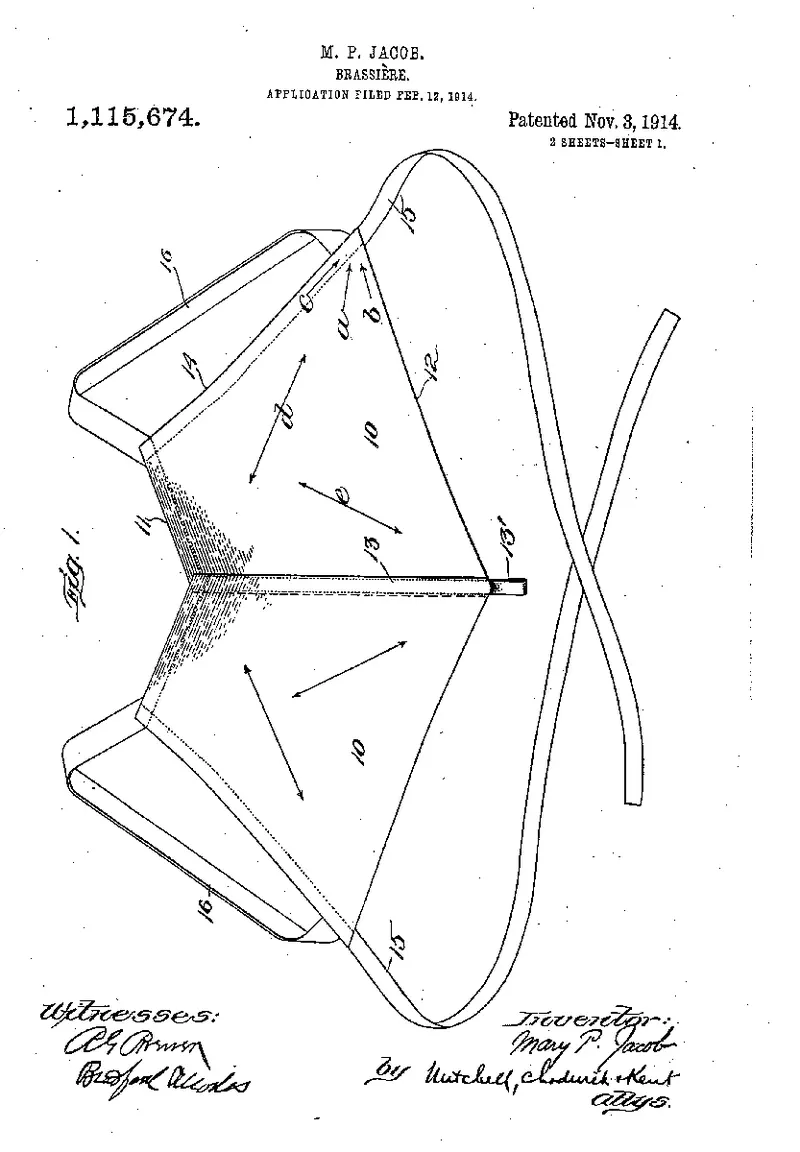
Photo: Mary P. Jacob, US Patent Office, Public domain US patent 1,115,674 for a soft “Brassiere” is granted on 3 November 1914: two bias-cut pieces of cloth with ties and tape, designed to suit gowns cut low at the back.
Sources: Google Patents; Invention & Technology
-
1922
Maidenform begins in a dress shop
In Enid Bissett’s New York shop, Bissett and Ida Rosenthal gather the flat bandeau in the middle for more support; William Rosenthal adds straps.
Source: Smithsonian Archives Center
-
1925
Rayon gets its name
Viscose “artificial silk”, used widely for 1920s underwear, becomes known as rayon. Elastic begins to appear in the backs of bras.
Source: The Underpinnings Museum
-
1926
The Kestos
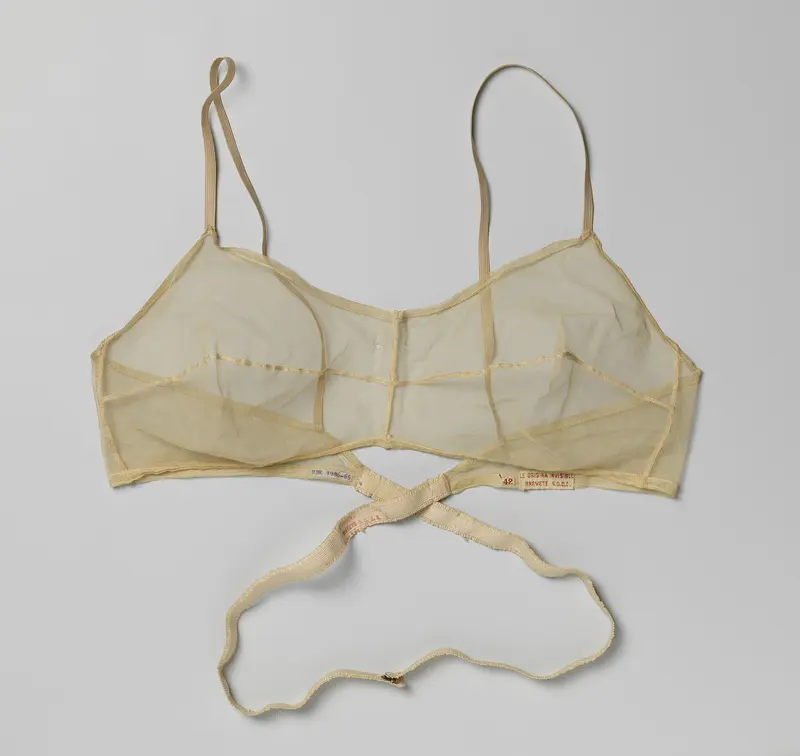
Photo: Rijksmuseum, CC0 Rosamond Klin’s London-designed Kestos, patented in 1926, has two lightly darted triangle cups — arguably one of the first commercially made bras with separate cups.
Source: The Underpinnings Museum
-
1929
Lastex
The first stretch yarn is introduced. Knitted or woven into fabric, it lets bras stretch and recover — and fit bodies between standard sizes.
Source: The Underpinnings Museum
-
1931
Underwires on sale
The first commercially produced underwired bra is sold in America; an “overwired” strapless follows in 1934. Wires become common in Britain only after the Second World War.
Source: The Underpinnings Museum
-
1932–1937
Cup sizes
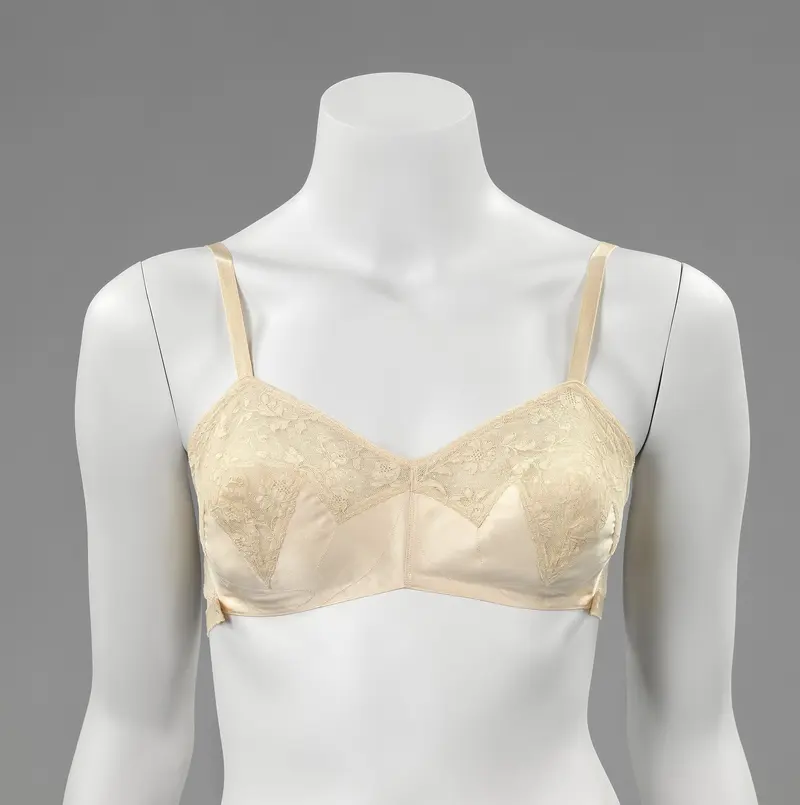
Photo: Rijksmuseum, CC0 Formfit offers small, average and full cups in 1932; S. H. Camp relates cups to the letters A–D; Warner’s lettered cups are dated to 1935 or 1937. Who was first is disputed.
Source: The Underpinnings Museum
-
1935
Whirlpool stitching
Joseph R. Bowen of Hollywood-Maxwell patents concentric rings of stitching to stabilise and shape the cup — the ancestor of the 1950s “bullet” look.
Source: The Underpinnings Museum
-
1939
Nylon
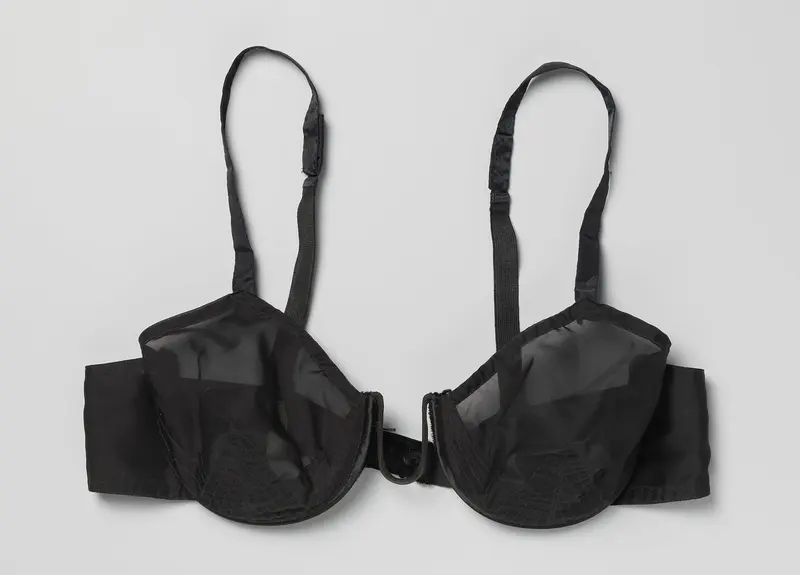
Photo: Rijksmuseum, CC0 DuPont introduces nylon. Nylon bras are on sale in 1941 and 1942, then withdrawn to conserve the fibre for the war effort.
Source: The Underpinnings Museum
-
1941
Rationing and CC41
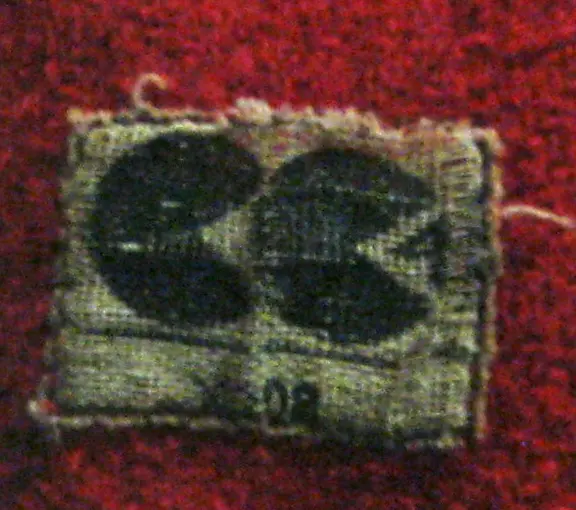
Photo: Chemical Engineer, CC BY-SA 4.0 Clothes are rationed in Britain from 1 June 1941 until 1949. Utility garments carry the CC41 mark; elastic is in very short supply.
Source: Imperial War Museums
-
1947
The New Look
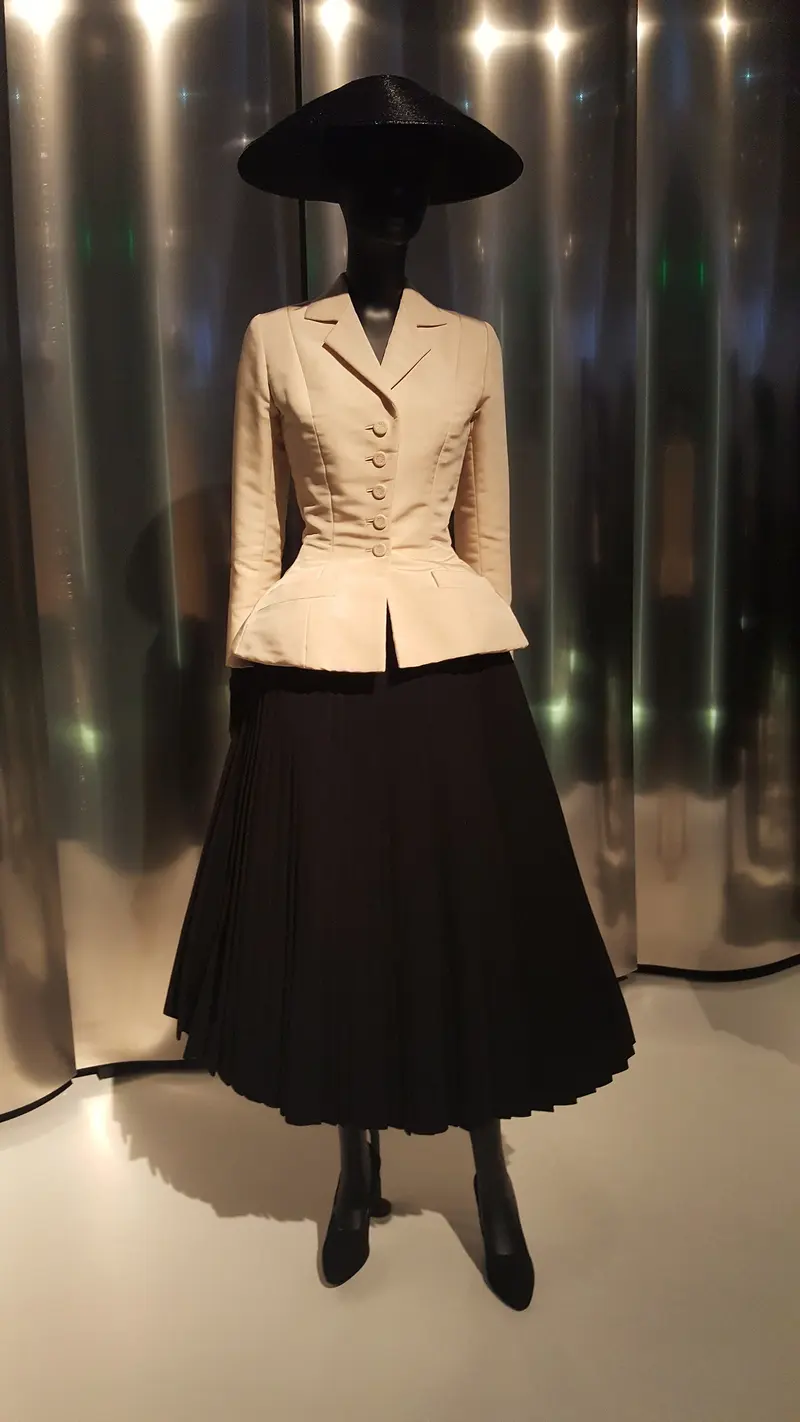
Photo: SpiritedMichelle, CC BY-SA 4.0 Dior’s “Corolle” line brings back curves. Underwiring and boned longline styles become more common, and padding increases in the 1950s.
Source: The Underpinnings Museum
-
1949
“I Dreamed…”
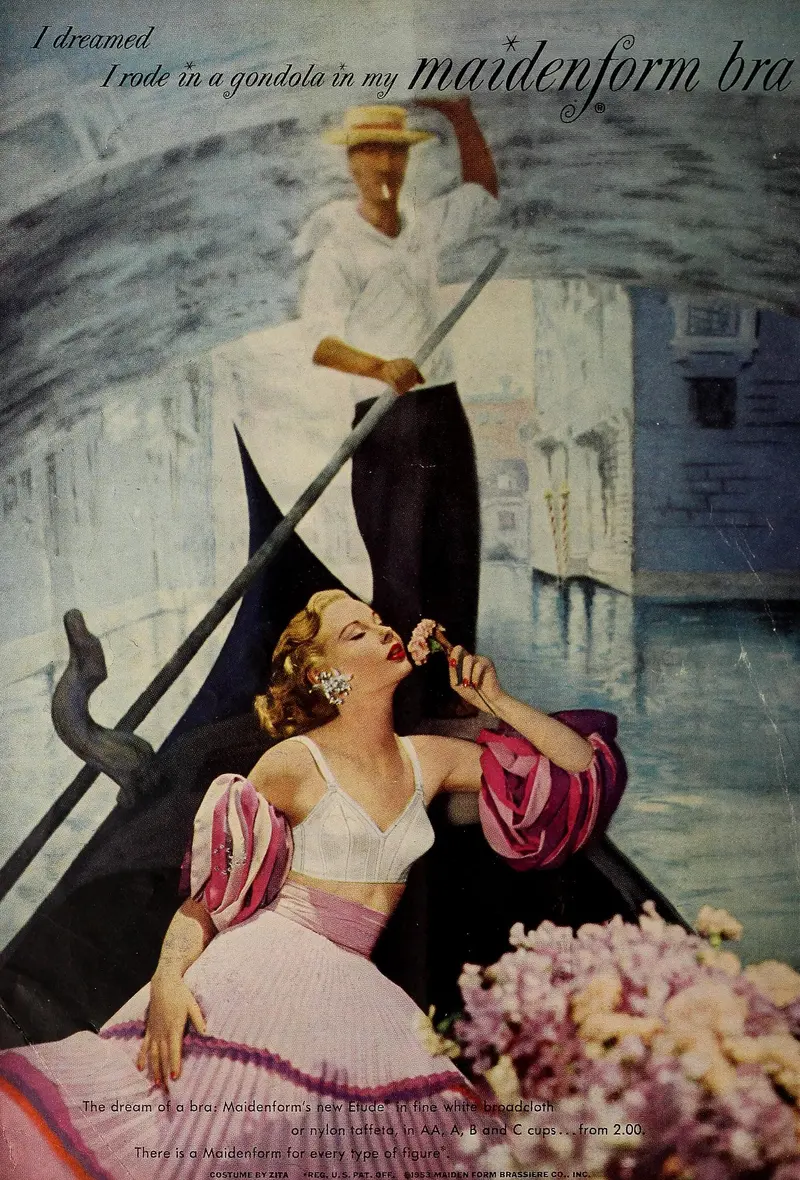
Photo: Maidenform, Public domain Maidenform launches its “I Dreamed” advertising campaign. It runs for twenty years.
Source: Smithsonian Archives Center
-
1950s
Pointed cups and pre-forming
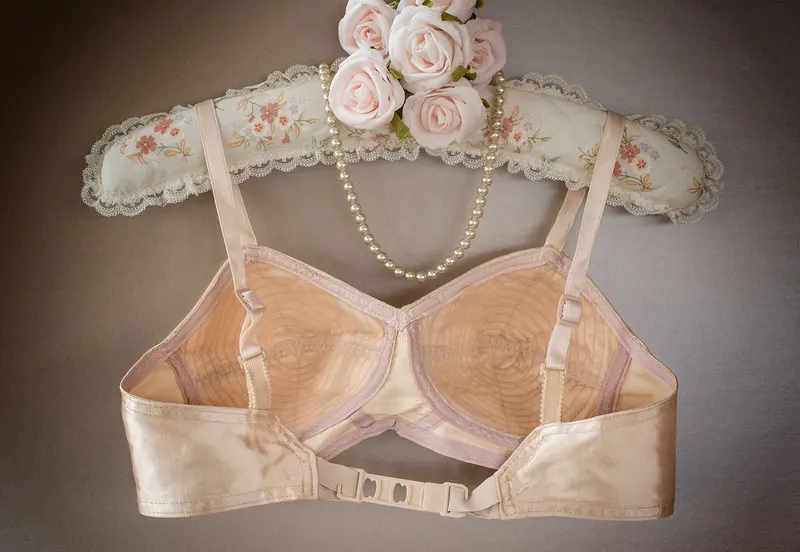
Photo: Emma Benitez, CC BY 2.0 Spiral-stitched cups give the pointed silhouette; at the end of the decade “pre-formed” moulded cups arrive.
-
1959
Lycra
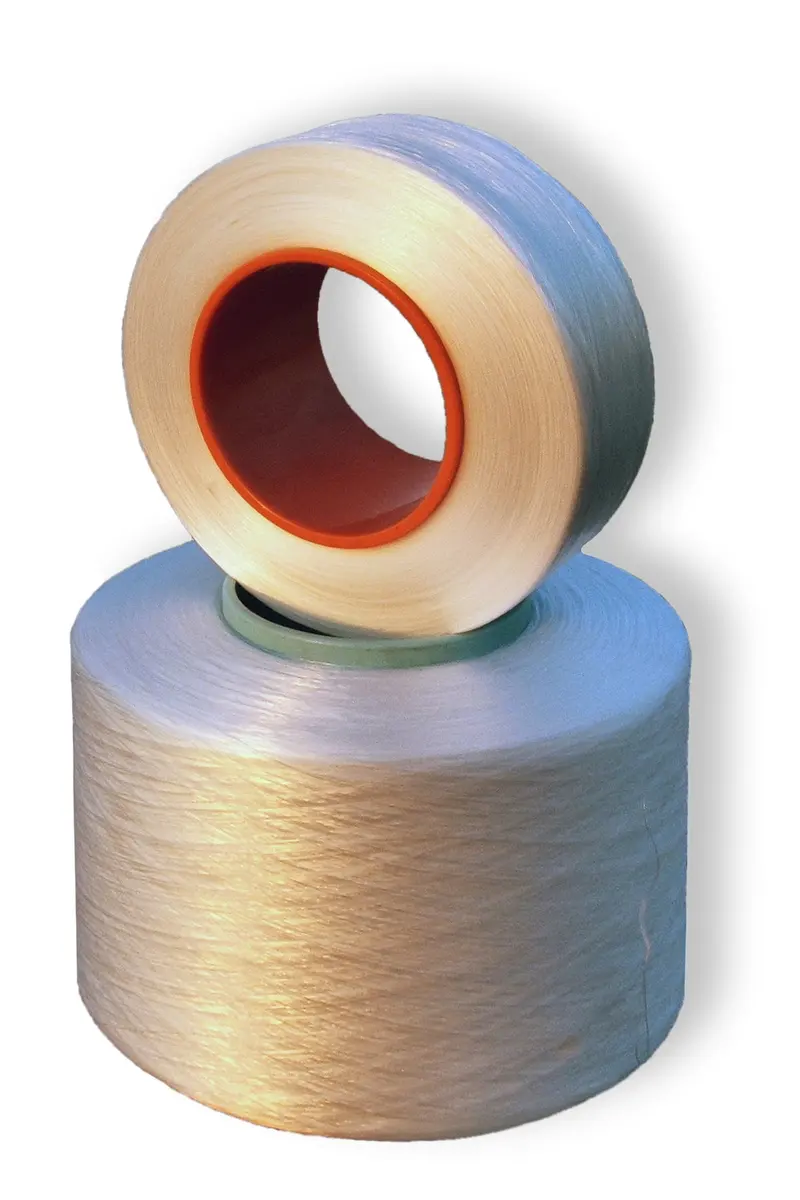
Photo: Luigi Chiesa, CC BY 3.0 DuPont announces Lycra. By the 1960s most bras combine nylon and Lycra, with stretch straps and wings.
Source: The Underpinnings Museum
-
1963
The Dream Lift
Canadelle’s Wonderbra brand introduces Canada’s first push-up bra, style 1300. Gossard takes the UK licence in 1968.
Source: The Underpinnings Museum
-
1968
The Freedom Trash Can
Protesters at the Miss America pageant throw bras and girdles into a bin. No bras are burned — the “bra burner” label came from later press coverage.
Source: HISTORY.com
-
Mid-1970s
Nearly Me
After her mastectomy, Barbie creator Ruth Handler founds a company making a more realistic breast prosthesis and campaigns for early detection.
Source: The Seattle Times
-
1977
The Jogbra
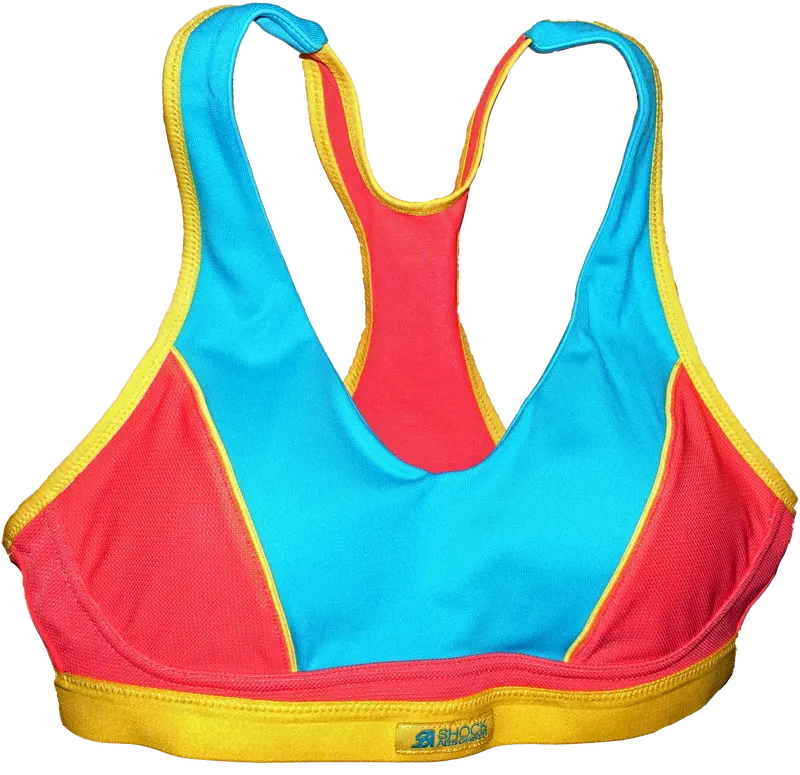
Photo: Tiia Monto, CC BY-SA 4.0 Lisa Lindahl and Polly Palmer Smith sew two jockstraps together; with Hinda Schreiber they launch the Jogbra. The “athletic brassiere” patent is issued in 1979.
Sources: Smithsonian Archives Center; Google Patents
-
1990s
Microfibres
Breathable microfibre nylons and viscose, such as Tactel and Tencel, are used widely for underwear.
Source: The Underpinnings Museum
-
1994
The battle of the bras
Playtex relaunches the Wonderbra in Britain; Gossard answers with the Ultrabra. Lingerie sales in February 1994 jump 370% on the month before.
Source: The Underpinnings Museum
-
2014–2016
The science of bounce
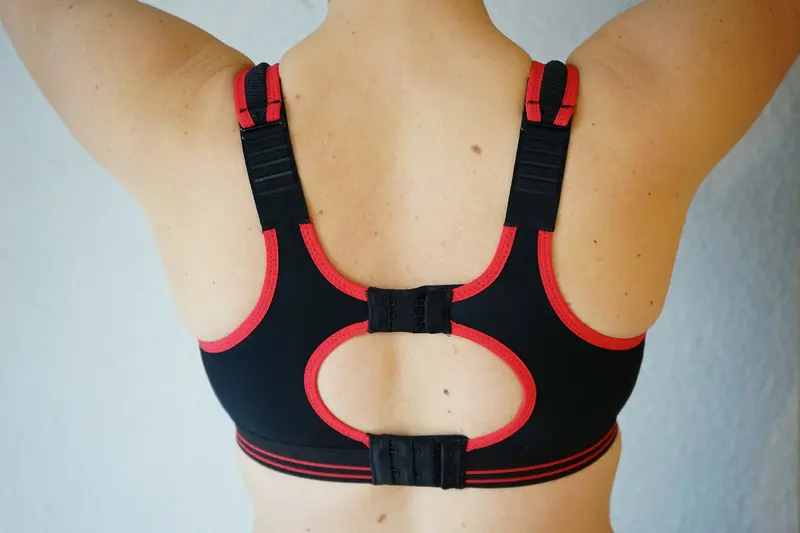
Photo: Hans, CC0 UK studies involving University of Portsmouth researchers find bra-fit problems common among marathon runners, and that breasts affect many schoolgirls’ participation in sport.
Sources: Brown N et al. (2014), “An investigation into breast support and sports bra use in female runners of the 2012 London Marathon”, J Sports Sci; Scurr J et al. (2016), “The influence of the breast on sport and exercise participation in school girls in the United Kingdom”, J Adolesc Health; University of Portsmouth
-
Today
Bras for every stage
Shops now offer pocketed post-surgery bras, front-fastening styles, nursing and maternity bras and size ranges far beyond A–D.
Sources: Bravissimo; Breast Cancer Now; Royce
Chapters
Read the history in depth
-
I
Antiquity – 15th century
Bands, bodices and breast bags
Long before anyone said “bra”, people bound, wrapped and supported the breasts. A Roman floor mosaic and a sealed room in an Austrian castle give us two of the clearest…
Photo: Clemensfranz, CC BY 2.5
-
II
c. 1500 – 1800
Whalebone and lacing: the age of stays
For three centuries, the fashionable body was built on stays — stiffened bodies of linen and “whalebone” that shaped the whole torso rather than the bust.
Photo: The Metropolitan Museum of Art, CC0
-
III
1800 – 1900
Steel and spoon busks: the corset century
Industry, new materials and changing silhouettes turned the corset into a mass-produced, heavily marketed garment — and inspired the first “bust supporters” as…
Photo: The Metropolitan Museum of Art, CC0
-
IV
1900 – 1929
The brassiere arrives
Sheer blouses, active lives and a new word — “brassiere” — turned bust support into a separate garment. Patents multiplied, and department stores took notice.
Photo: Mary P. Jacob, US Patent Office, Public domain
-
V
1929 – 1939
Cups, sizes and stretch
In one decade the bra gained separate cups, stretch yarns, underwires, adjustable straps and — most importantly for fit — cup sizes.
Photo: Rijksmuseum, CC0
-
VI
1939 – 1959
War, rationing and the New Look
Nylon arrived and disappeared again; Britain rationed clothes; then Dior’s New Look demanded curves — and foundation garments to build them.
Photo: Emma Benitez, CC BY 2.0
-
VII
1959 – 1989
Freedom, stretch and sport
Lycra made bras stretch, the push-up plunge arrived, a protest was misreported, and three women in Vermont sewed two jockstraps together.
Photo: Tiia Monto, CC BY-SA 4.0
-
VIII
1990 – today
The modern bra
Microfibres, the “battle of the bras”, laboratory research into breast movement, wider size ranges and specialist bras for pregnancy and surgery.
A note on “firsts”: many people have been credited with inventing the bra. We say who claimed what, and when, rather than crowning a single inventor — as the fashion historian Valerie Steele puts it, no one person invented the brassiere.