An independent history of the bra — and a guide to choosing one

BraFoundation

The history of support Antiquity to today

From breast band to sports bra

How a band of cloth on a Roman mosaic became stays of whalebone, a patented “brassière” and the bras in your drawer — told through museum garments, patents and fitting rooms, with sources for every date.
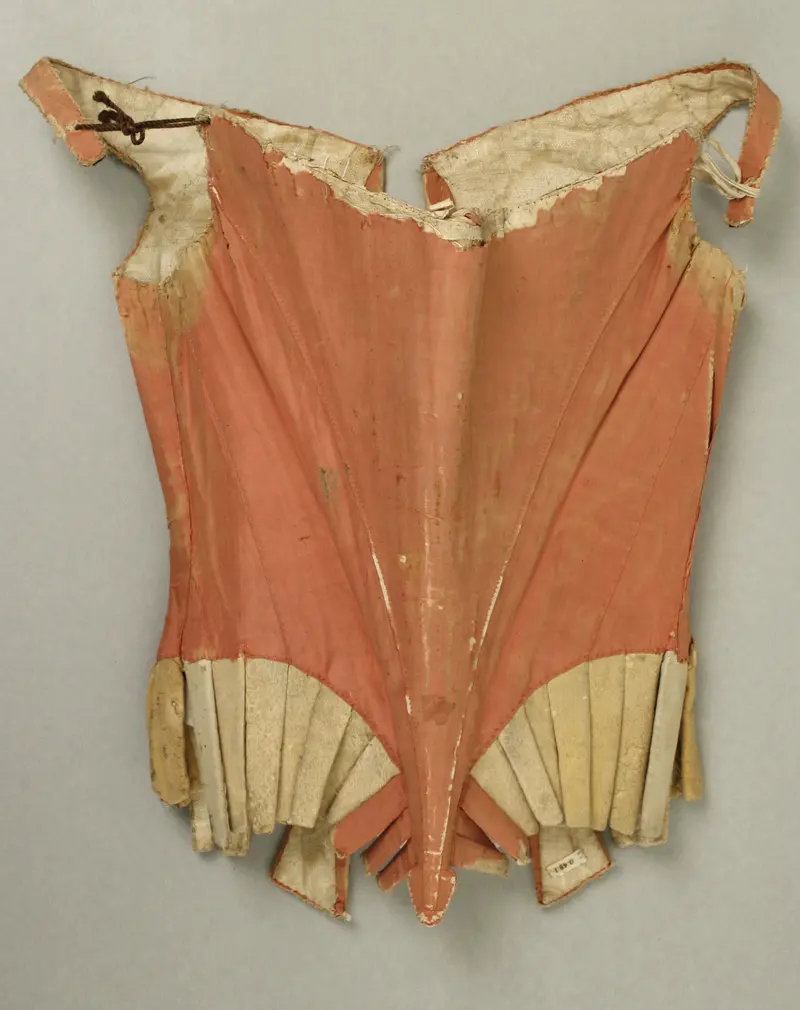
Faded coral silk stays from the late 18th century with tabbed lower edge
British stays, late 18th century — The Metropolitan Museum of Art (13.49.1) Photo: The Metropolitan Museum of Art, CC0

The timeline

A history in 17 pictures

Highlights from the archive. Read all 37 timeline entries, with sources.

  1. Early 4th century AD

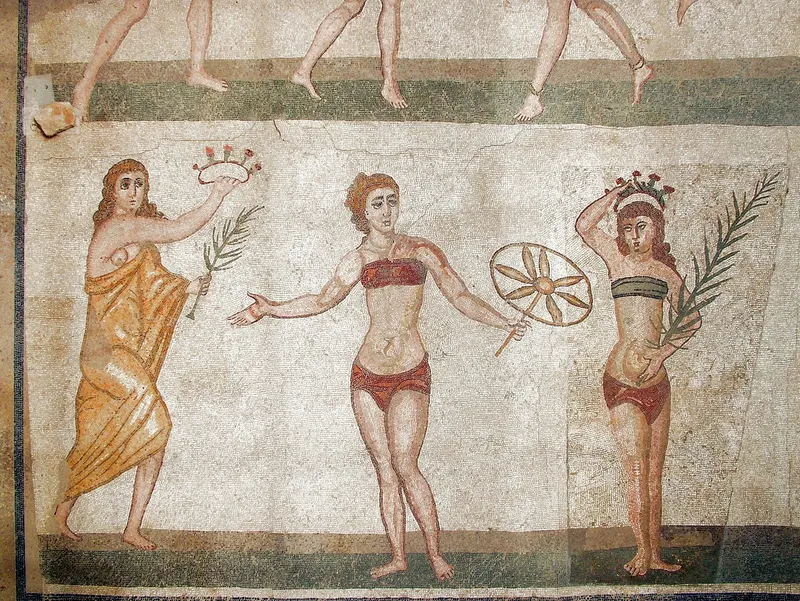
    Roman athletes in the strophium

    Roman floor mosaic of young women athletes wearing band-like garments across the chest
    Photo: Clemensfranz, CC BY 2.5

    A floor mosaic in the Villa Romana del Casale, Sicily, shows young women exercising in a breastband the Romans called a strophium, worn with a loincloth called a subligaculum.

    Chapter: Bands, bodices and breast bags

  2. 15th century

    Linen bras in an Austrian castle

    A white castle on a wooded hill above a village in a snowy Alpine valley
    Photo: Johann Jaritz, CC BY-SA 3.0 at

    Excavations at Lengberg Castle, East Tyrol, from 2008 found four linen garments with distinct cups, some trimmed with needle lace. Radiocarbon dating confirmed they are fifteenth century.

    Chapter: Bands, bodices and breast bags

  3. 1780s

    The inverted cone

    Faded coral silk stays from the late 18th century with tabbed lower edge
    Photo: The Metropolitan Museum of Art, CC0

    Stays of the 1780s give a smooth, firm cone-shaped torso rather than emphasising the bust; their whalebone softens with body heat and moulds to the wearer.

    Chapter: Whalebone and lacing: the age of stays

  4. c. 1820

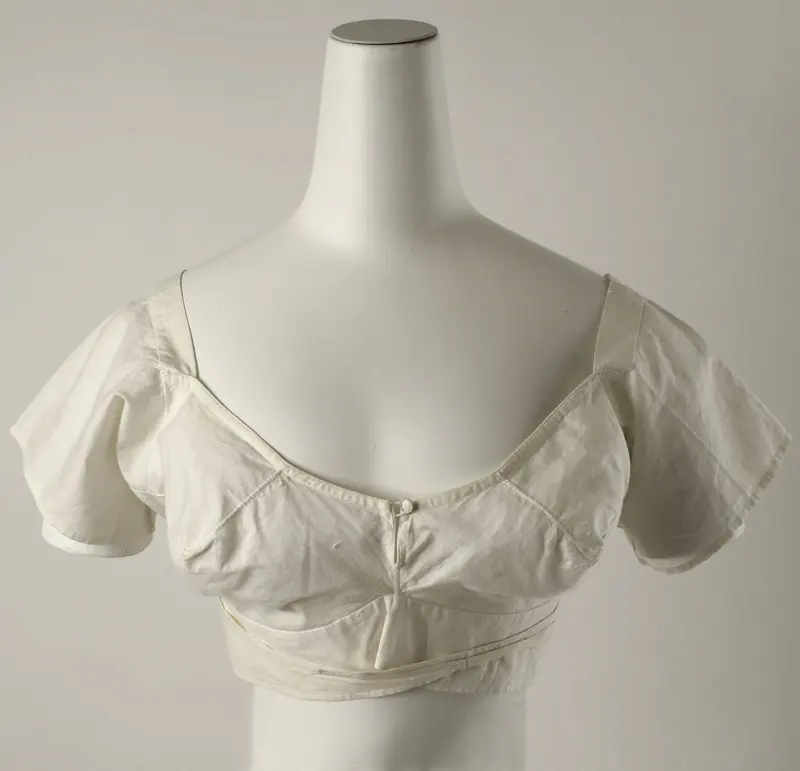
    A cotton bust bodice

    White cotton bodice with short sleeves shaped to support the bust, on a mannequin
    Photo: The Metropolitan Museum of Art, CC0

    A short-sleeved cotton bodice of about 1820 in the Metropolitan Museum of Art is catalogued as a “brassiere” — a reminder that shaped bust supports existed long before the word.

    Chapter: Steel and spoon busks: the corset century

  5. Early 1870s

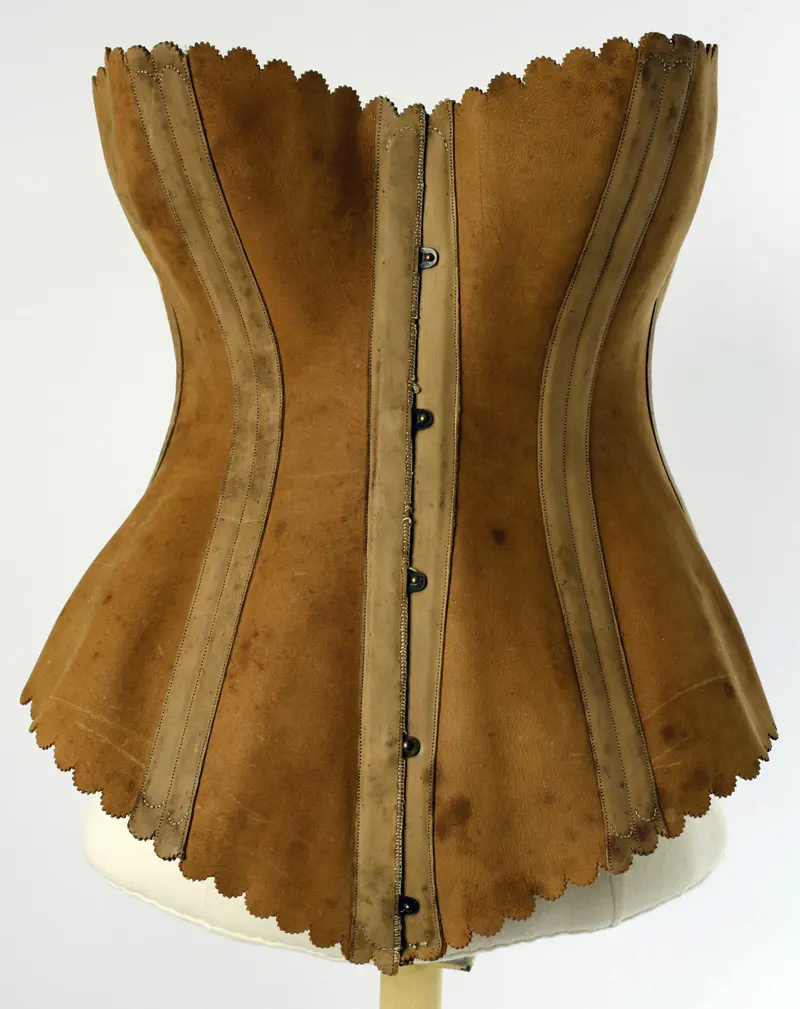
    Bustles and longer corsets

    Tan Victorian corset with front busk fastening and scalloped edges, on a stand
    Photo: The Metropolitan Museum of Art, CC0

    As the bustle replaces the crinoline, corsets grow much longer and more rigid, often with a steel busk at the front and brass eyelets at the back.

    Chapter: Steel and spoon busks: the corset century

  6. 1901

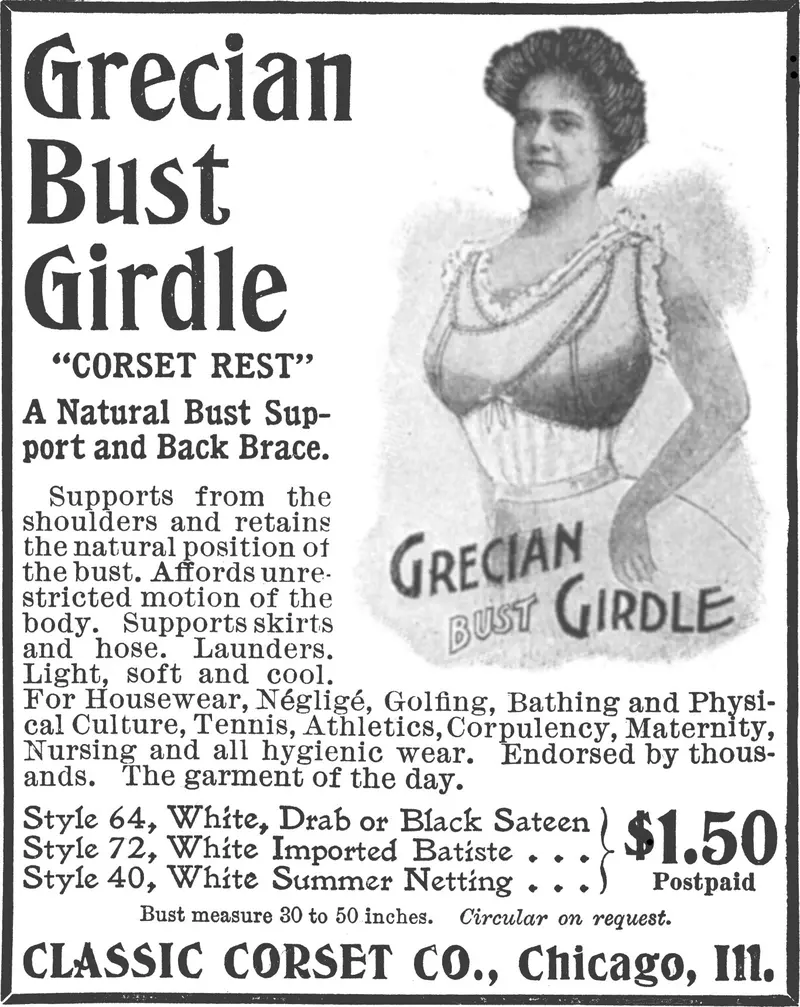
    Bust girdles by post

    1901 magazine advertisement for the Grecian Bust Girdle, a bust support worn from the shoulders
    Photo: Classic Corset Co. advertisement, The Delineator, Public domain

    Magazine advertisements offer bust supports worn from the shoulders, such as the “Grecian Bust Girdle”, sold as an alternative or companion to the corset.

    Chapter: The brassiere arrives

  7. 1914

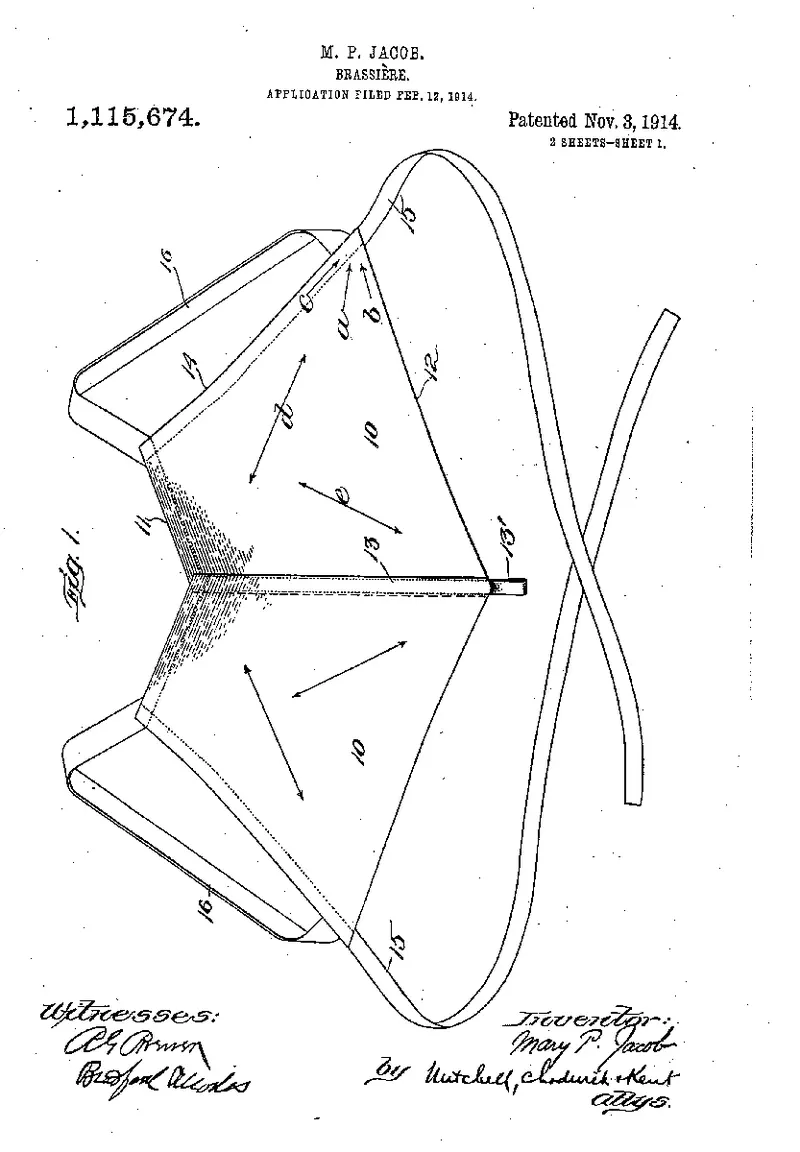
    Mary Phelps Jacob’s patent

    Patent drawing of Mary Phelps Jacob's backless brassiere, US patent 1,115,674
    Photo: Mary P. Jacob, US Patent Office, Public domain

    US patent 1,115,674 for a soft “Brassiere” is granted on 3 November 1914: two bias-cut pieces of cloth with ties and tape, designed to suit gowns cut low at the back.

    Chapter: The brassiere arrives

  8. 1926

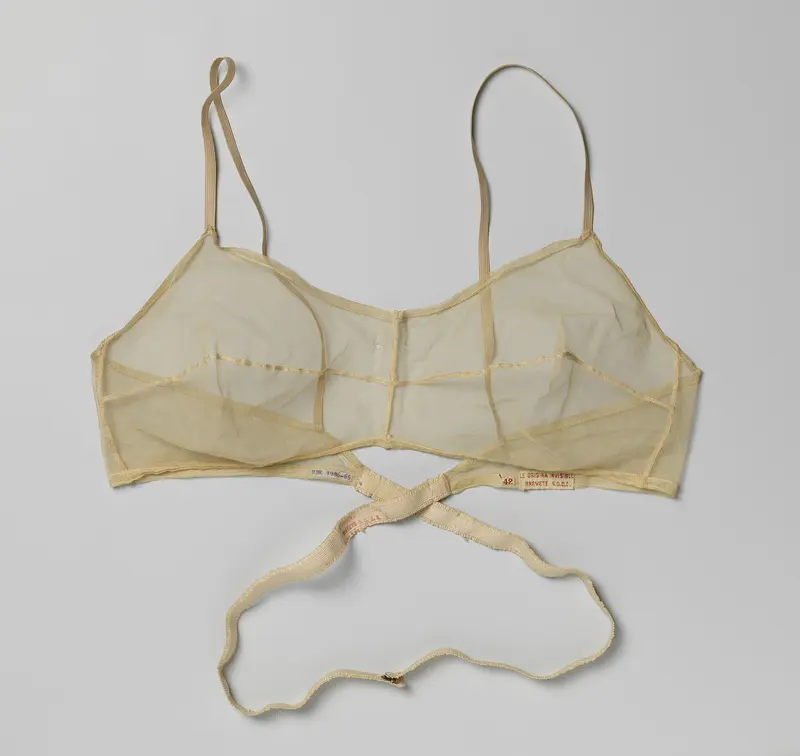
    The Kestos

    Beige tulle bra with thin straps and a low back fastening, laid flat
    Photo: Rijksmuseum, CC0

    Rosamond Klin’s London-designed Kestos, patented in 1926, has two lightly darted triangle cups — arguably one of the first commercially made bras with separate cups.

    Chapter: The brassiere arrives

  9. 1932–1937

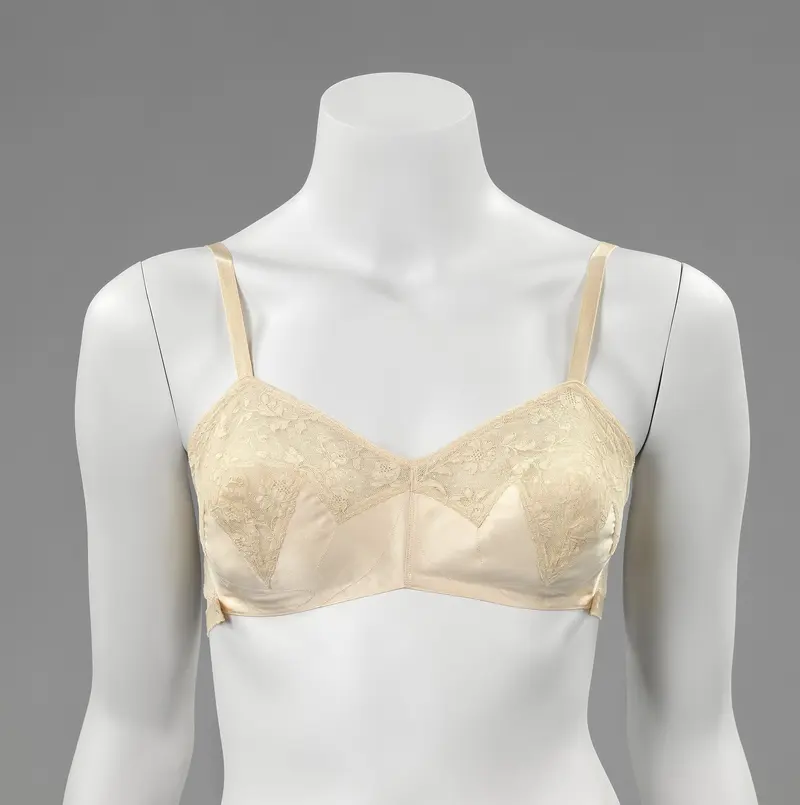
    Cup sizes

    Pale salmon satin and lace bra displayed on a museum mannequin
    Photo: Rijksmuseum, CC0

    Formfit offers small, average and full cups in 1932; S. H. Camp relates cups to the letters A–D; Warner’s lettered cups are dated to 1935 or 1937. Who was first is disputed.

    Chapter: Cups, sizes and stretch

  10. 1939

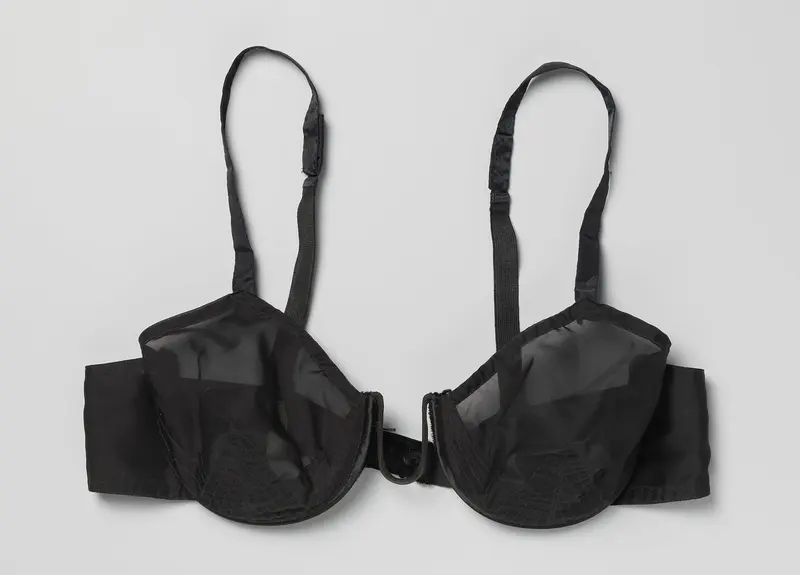
    Nylon

    Black nylon underwired bra trimmed with satin and velvet, laid flat
    Photo: Rijksmuseum, CC0

    DuPont introduces nylon. Nylon bras are on sale in 1941 and 1942, then withdrawn to conserve the fibre for the war effort.

    Chapter: War, rationing and the New Look

  11. 1941

    Rationing and CC41

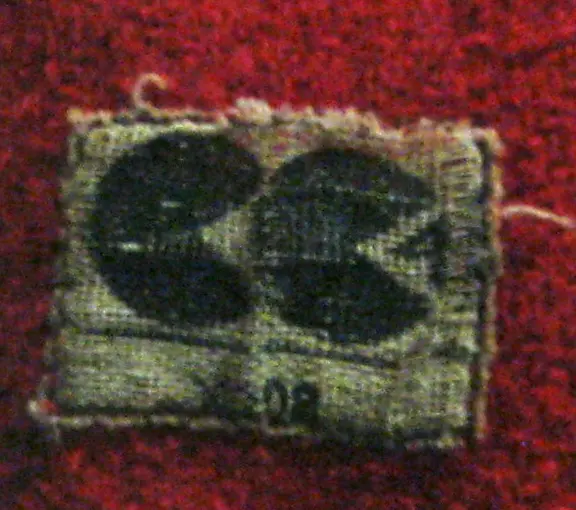
    Woven CC41 utility clothing label with two black cheese-shaped segments
    Photo: Chemical Engineer, CC BY-SA 4.0

    Clothes are rationed in Britain from 1 June 1941 until 1949. Utility garments carry the CC41 mark; elastic is in very short supply.

    Chapter: War, rationing and the New Look

  12. 1947

    The New Look

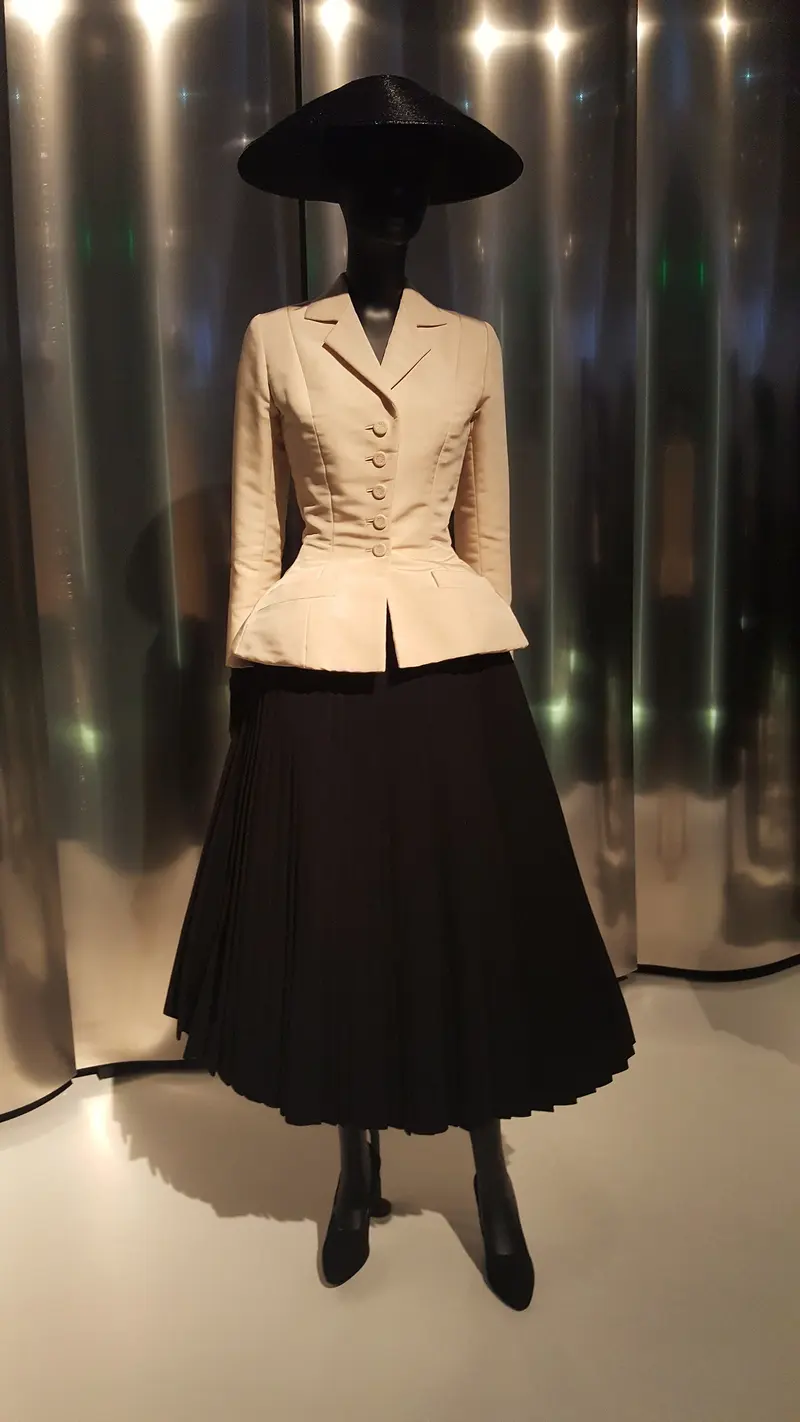
    A museum mannequin wearing a cream jacket with a narrow waist and a full black pleated skirt
    Photo: SpiritedMichelle, CC BY-SA 4.0

    Dior’s “Corolle” line brings back curves. Underwiring and boned longline styles become more common, and padding increases in the 1950s.

    Chapter: War, rationing and the New Look

  13. 1949

    “I Dreamed…”

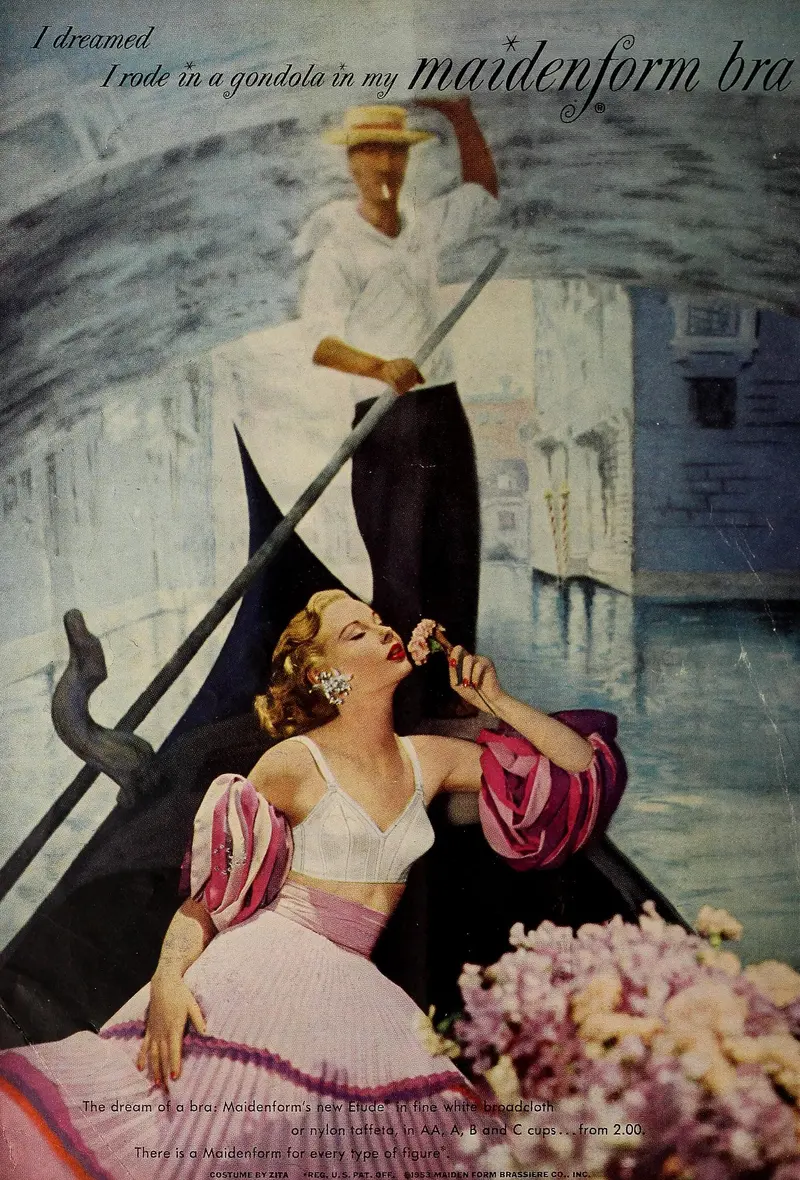
    A colour magazine advert showing a woman in a white bra and pink skirt reclining in a Venetian gondola
    Photo: Maidenform, Public domain

    Maidenform launches its “I Dreamed” advertising campaign. It runs for twenty years.

    Chapter: War, rationing and the New Look

  14. 1950s

    Pointed cups and pre-forming

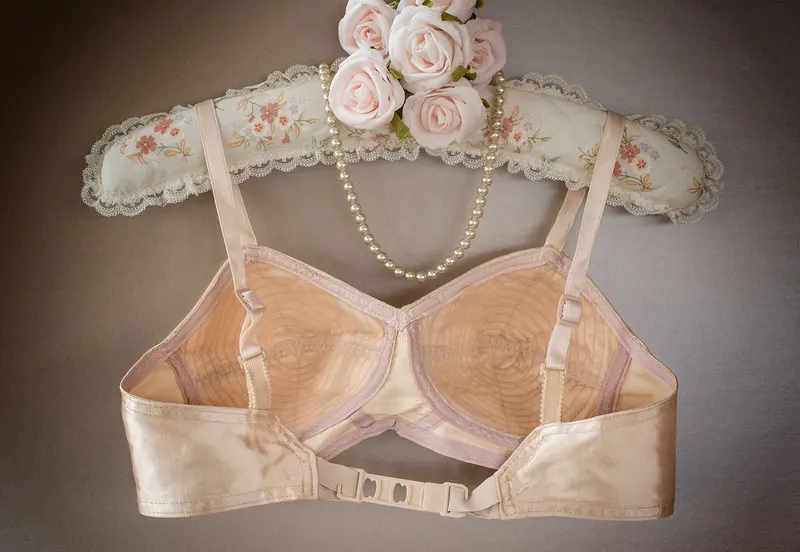
    Peach satin bullet bra with circular-stitched pointed cups on a padded floral hanger
    Photo: Emma Benitez, CC BY 2.0

    Spiral-stitched cups give the pointed silhouette; at the end of the decade “pre-formed” moulded cups arrive.

    Chapter: War, rationing and the New Look

  15. 1959

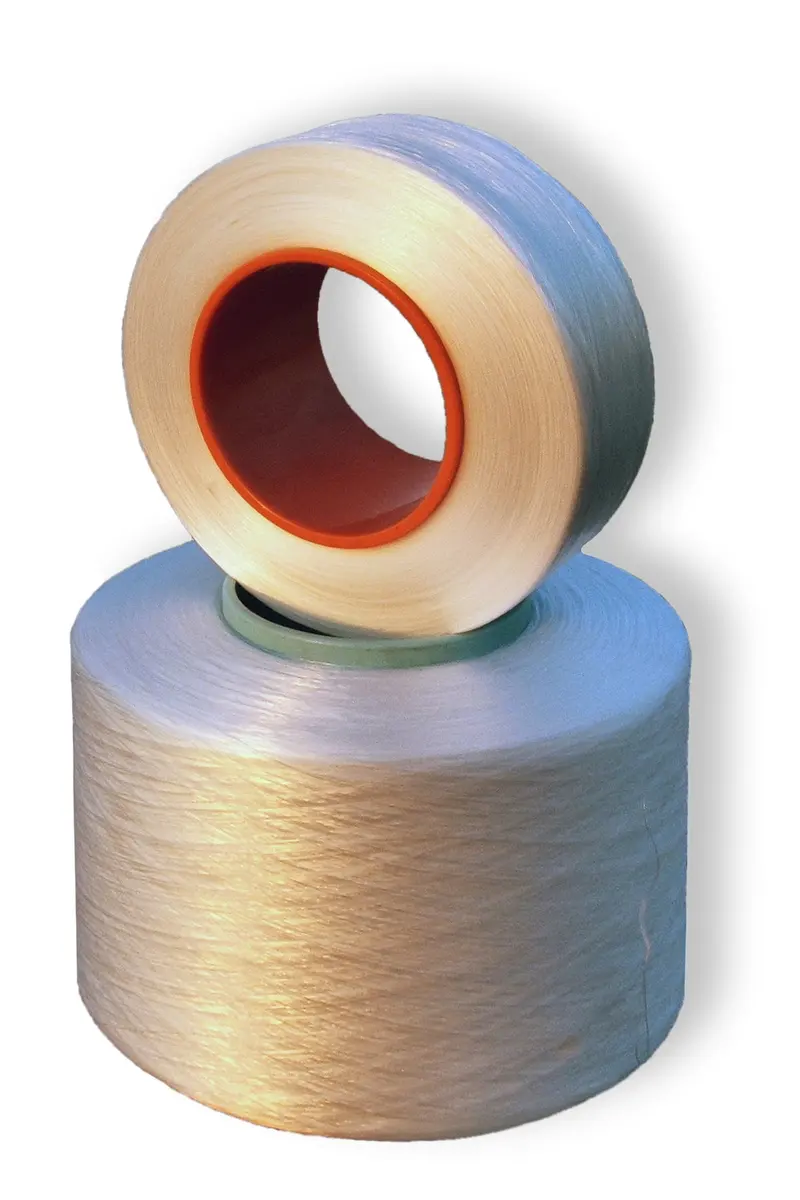
    Lycra

    Two spools of fine white spandex (elastane) yarn
    Photo: Luigi Chiesa, CC BY 3.0

    DuPont announces Lycra. By the 1960s most bras combine nylon and Lycra, with stretch straps and wings.

    Chapter: Freedom, stretch and sport

  16. 1977

    The Jogbra

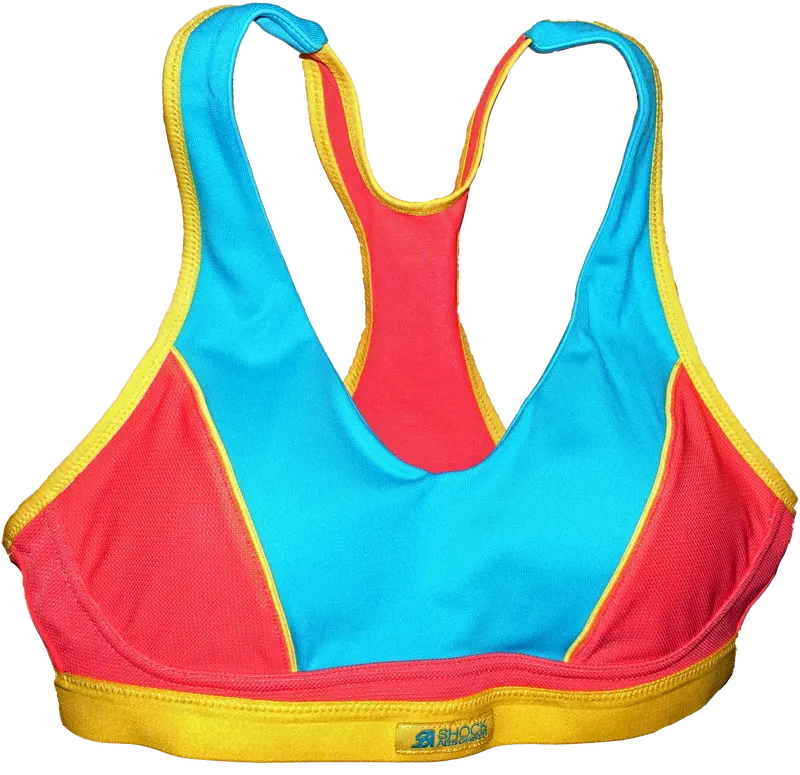
    Racerback sports bra in turquoise, coral and yellow panels
    Photo: Tiia Monto, CC BY-SA 4.0

    Lisa Lindahl and Polly Palmer Smith sew two jockstraps together; with Hinda Schreiber they launch the Jogbra. The “athletic brassiere” patent is issued in 1979.

    Chapter: Freedom, stretch and sport

  17. 2014–2016

    The science of bounce

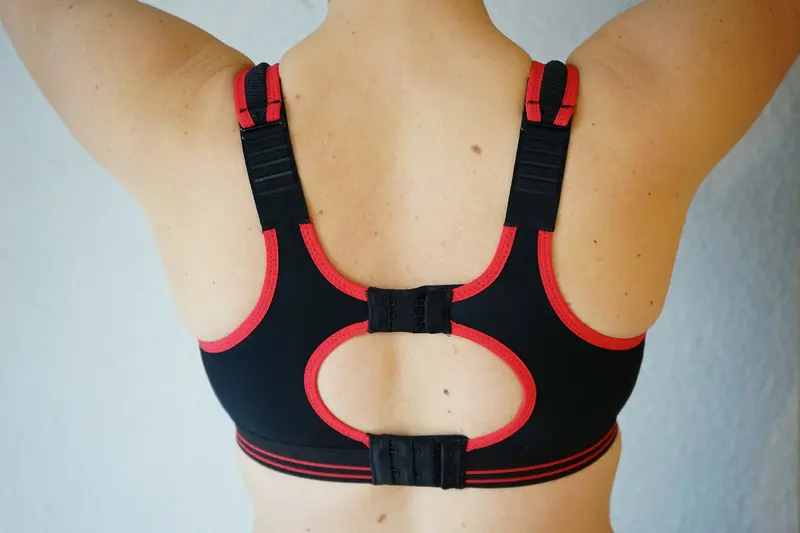
    Back view of a black sports bra with adjustable straps and a hook-and-eye fastening
    Photo: Hans, CC0

    UK studies involving University of Portsmouth researchers find bra-fit problems common among marathon runners, and that breasts affect many schoolgirls’ participation in sport.

    Chapter: The modern bra

In eight chapters

The long story, told properly

  1. I Bands, bodices and breast bags Antiquity – 15th century
  2. II Whalebone and lacing: the age of stays c. 1500 – 1800
  3. III Steel and spoon busks: the corset century 1800 – 1900
  4. IV The brassiere arrives 1900 – 1929
  5. V Cups, sizes and stretch 1929 – 1939
  6. VI War, rationing and the New Look 1939 – 1959
  7. VII Freedom, stretch and sport 1959 – 1989
  8. VIII The modern bra 1990 – today

Then & now

What changed, and what didn’t

All comparisons

Materials

Then · 1660s–1950s

Linen, wool and silk, stiffened with whalebone (baleen) in narrow stitched channels; later steel busks, leather facings and brass eyelets.

Now

Most bras are made from polyamide (nylon) or polyester blended with elastane (Lycra), often with moulded foam or spacer cups.

Fastenings

Then · 1780s–1930s

Stays and corsets laced at the back (or front) through eyelets, with a front busk; a 1883 corset fastened with loops and studs on a steel spoon busk.

Now

Hook-and-eye fastenings with several rows, adjustable sliders on the straps, and front fastenings for people who find reaching behind difficult.

Sizing

Then · 1930s–1950s

Graded cup sizes only appeared in the 1930s — small, average and full; then letters A to D. In Britain many cups were still labelled “medium” or “average” in the late 1950s, and a 1958…

Now

UK sizes pair a band (28, 30, 32…) with a cup letter that runs on with doubles: D, DD, E, F, FF, G, GG, H… up to K and beyond.

Support

Then · Before 1977

Support came from the whole torso — stays and corsets shaped the body from bust to hips. Separate cups arrived in the late 1920s, underwires in 1931 (common in Britain only after the war)…

Now

Support comes mainly from the band, with the straps playing a smaller part. Sports bras are graded by impact level, and laboratory research measures how well they reduce breast movement.

The atelier edit

Today’s descendants

A small, researched selection from long-running lines. See the whole shop.

The fitting room

Guides for the bra you wear now

  1. 01 Bra types explained
  2. 02 How to measure your bra size and check the fit
  3. 03 Sports bras by impact level
  4. 04 How to wash and care for your bras
  5. 05 Bras in pregnancy and for breastfeeding
  6. 06 Bras after breast surgery
  7. 07 Questions answered
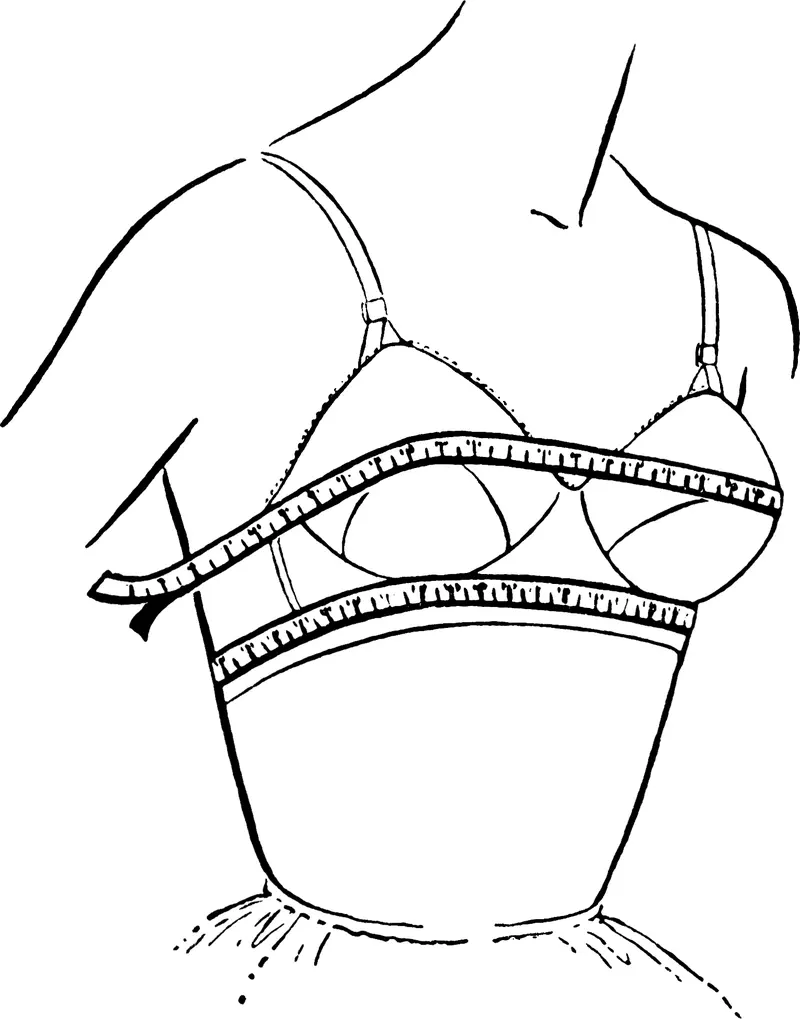
Line drawing of a tape measure around the ribcage under a bra and across the bust
‘Measure for bra size: underbust measure plus 5 inches’ — advice from the 1958 booklet Posture & Foundation Garments Photo: Posture & Foundation Garments (1958), anonymous, Public domain