History Chapter III
Steel and spoon busks: the corset century
1800 – 1900
Industry, new materials and changing silhouettes turned the corset into a mass-produced, heavily marketed garment — and inspired the first “bust supporters” as alternatives.
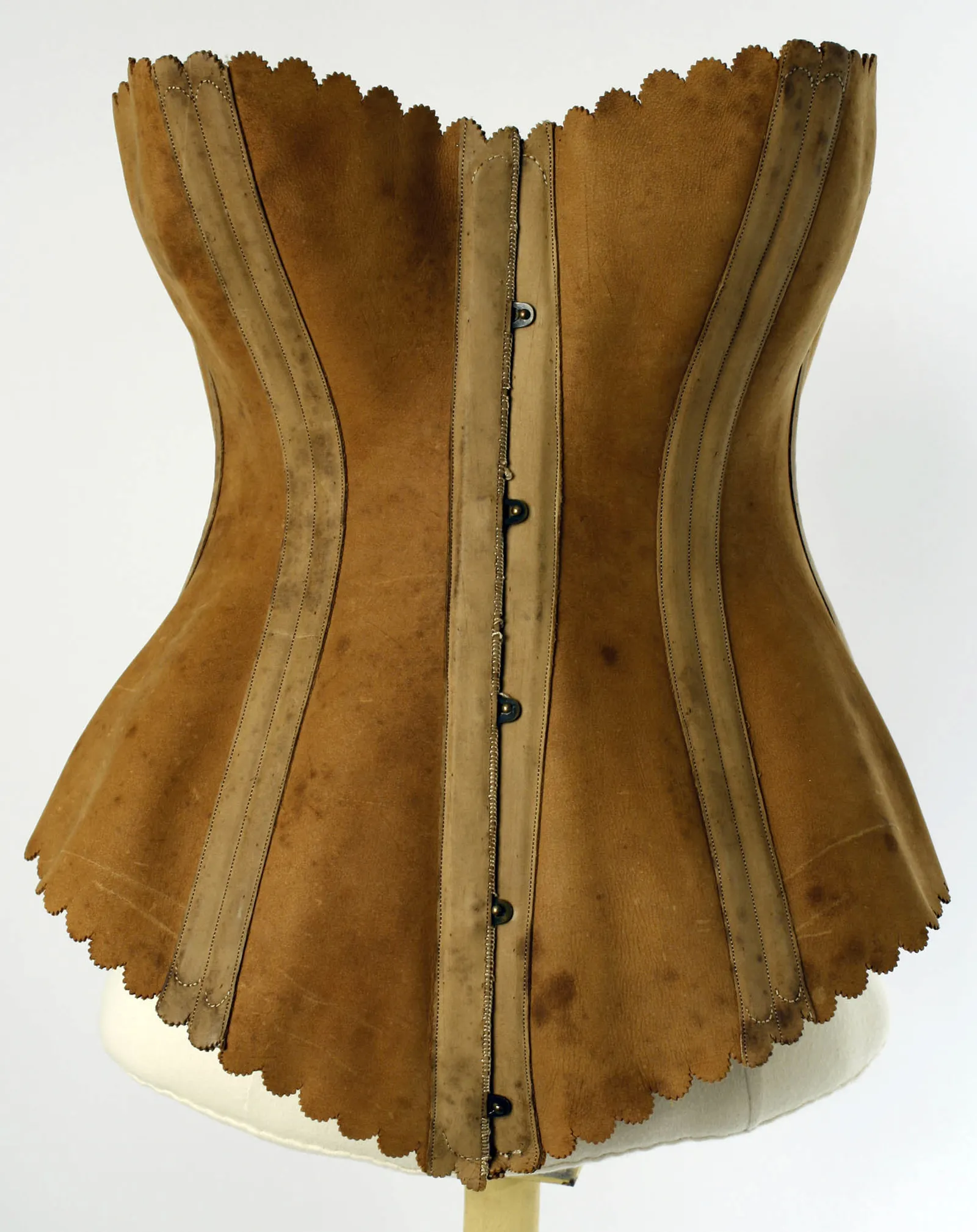
The nineteenth century is the century of the corset. As skirts changed shape — from the narrow high-waisted dresses of the 1800s to crinolines and then bustles — corsets changed beneath them, and factories, catalogues and advertising made them available to far more women than before.
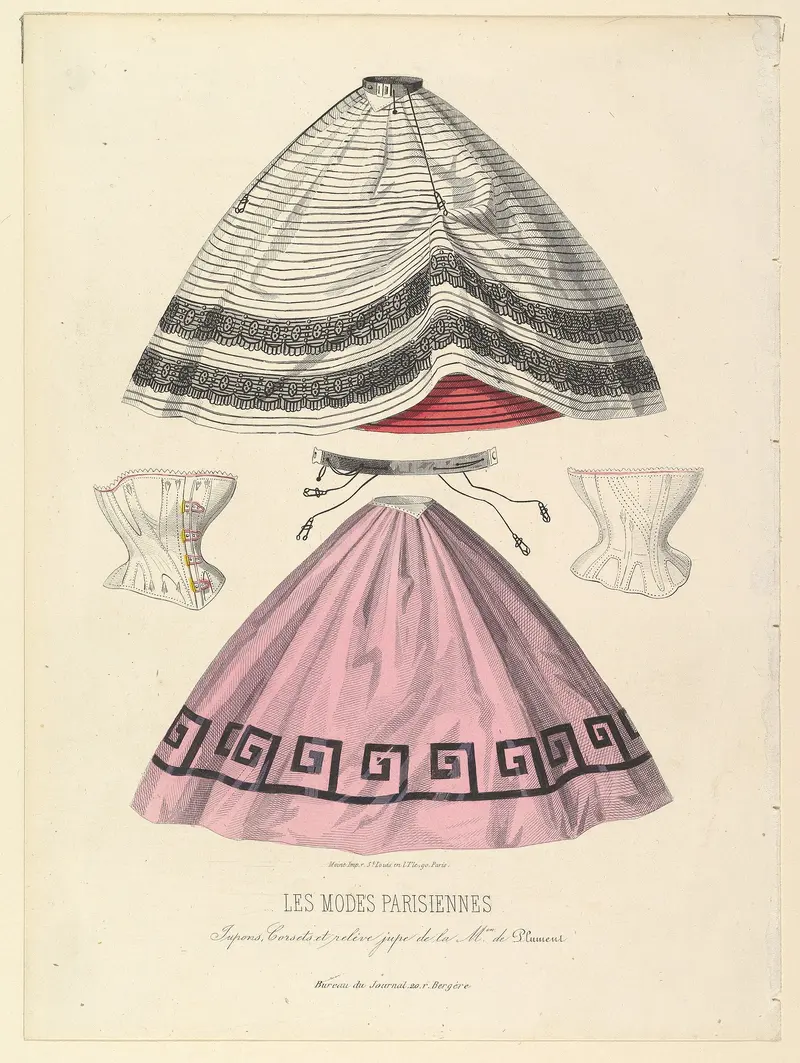
Longer, stiffer, tighter
In the early 1870s the bustle replaced the crinoline, and corsets grew much longer to create the fashionable long, slender line. They also had to be rigid enough to smooth over the layers worn beneath — chemise and petticoat.
A red corset of 1883 at the V&A shows how this was done. Strips of whalebone, covered in leather, form a scaffold around the torso. At the front is a steel busk — here a “spoon busk”, wider at the bottom than the top. It was supposed to spread the pressure on the abdomen. In practice, the museum notes, the shape could let the corset be pulled even tighter at the waist. The corset laced at the back through stamped brass eyelets.
Manufacturers registered and named their designs to stop copying and to tempt customers with the latest style — Brown’s “Dermathistic” corset of 1883, with leather-faced bones and steels, is one example the V&A records.
The straight front
By the 1890s the silhouette had become more angular. A pink satin corset of 1890–95 at the V&A has a straight busk that runs in a vertical line from bust to abdomen — said, again, to relieve pressure on the internal organs. Bust and hip gores gave it shape, and decorative “flossing” stitches stopped the whalebone from working its way out of its channels.
The first alternatives
Not everyone accepted the corset. Throughout the century, inventors patented ways to support the bust without one.
- In 1876, a Boston dressmaker, Olivia Flynt, patented a “bust supporter” that would, in her words as quoted by Invention & Technology, allow “beauty of form to be preserved without lacing or otherwise injuriously pressing or binding the body”.
- In 1889, according to the Paris lingerie house Cadolle, its founder Herminie Cadolle showed a “corselet-gorge” at the Universal Exhibition — in effect, the corset cut in two, with the upper part supporting the breasts. The company calls it the first bra; that is Cadolle’s own claim.
- In 1893, Marie Tucek received US patent 494,397 for a “breast supporter”: a shaped plate with pockets for the breasts, held by shoulder straps that crossed at the back and fastened with hooks and eyes at the front.
Health was a constant theme. The Underpinnings Museum points out that dress reformers criticised corsetry for restricting women, and that breathable cellular fabrics such as Aertex — invented in the UK in 1888 — were marketed as healthy underwear.
Why it matters
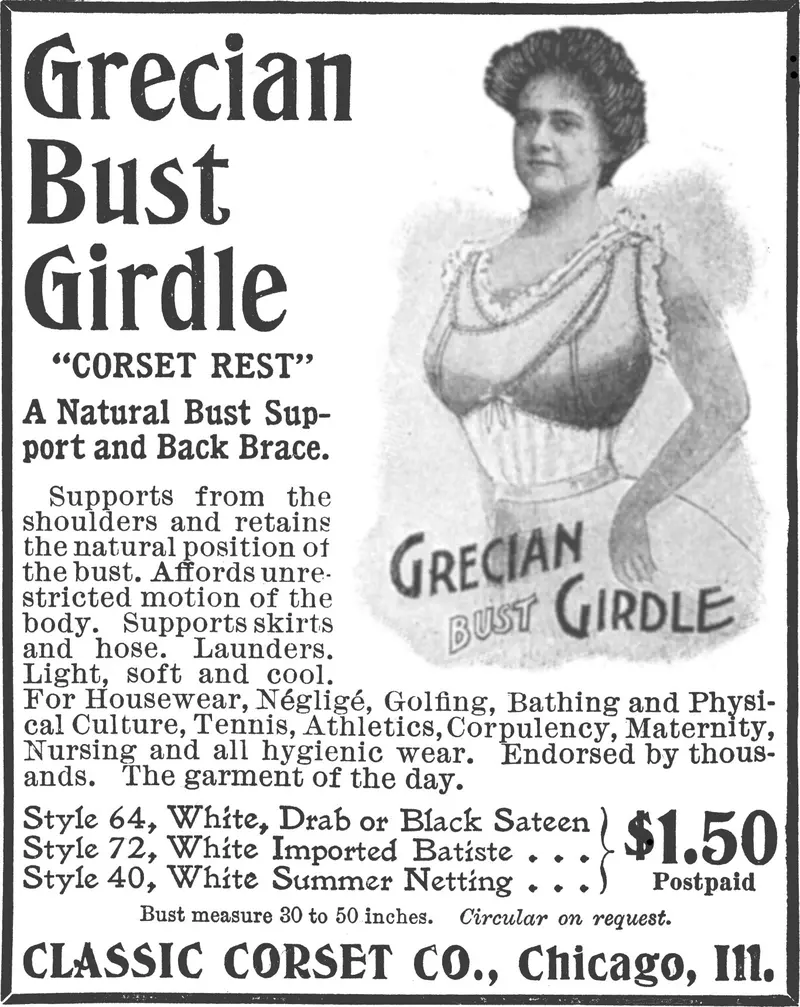
By 1900 most of the ingredients of the bra existed somewhere: shoulder straps, front fastenings, separate support for each breast, and a public appetite for something less rigid. What was missing was a fashion that called for it. That arrived with the new century.