History Chapter II
Whalebone and lacing: the age of stays
c. 1500 – 1800
For three centuries, the fashionable body was built on stays — stiffened bodies of linen and “whalebone” that shaped the whole torso rather than the bust.
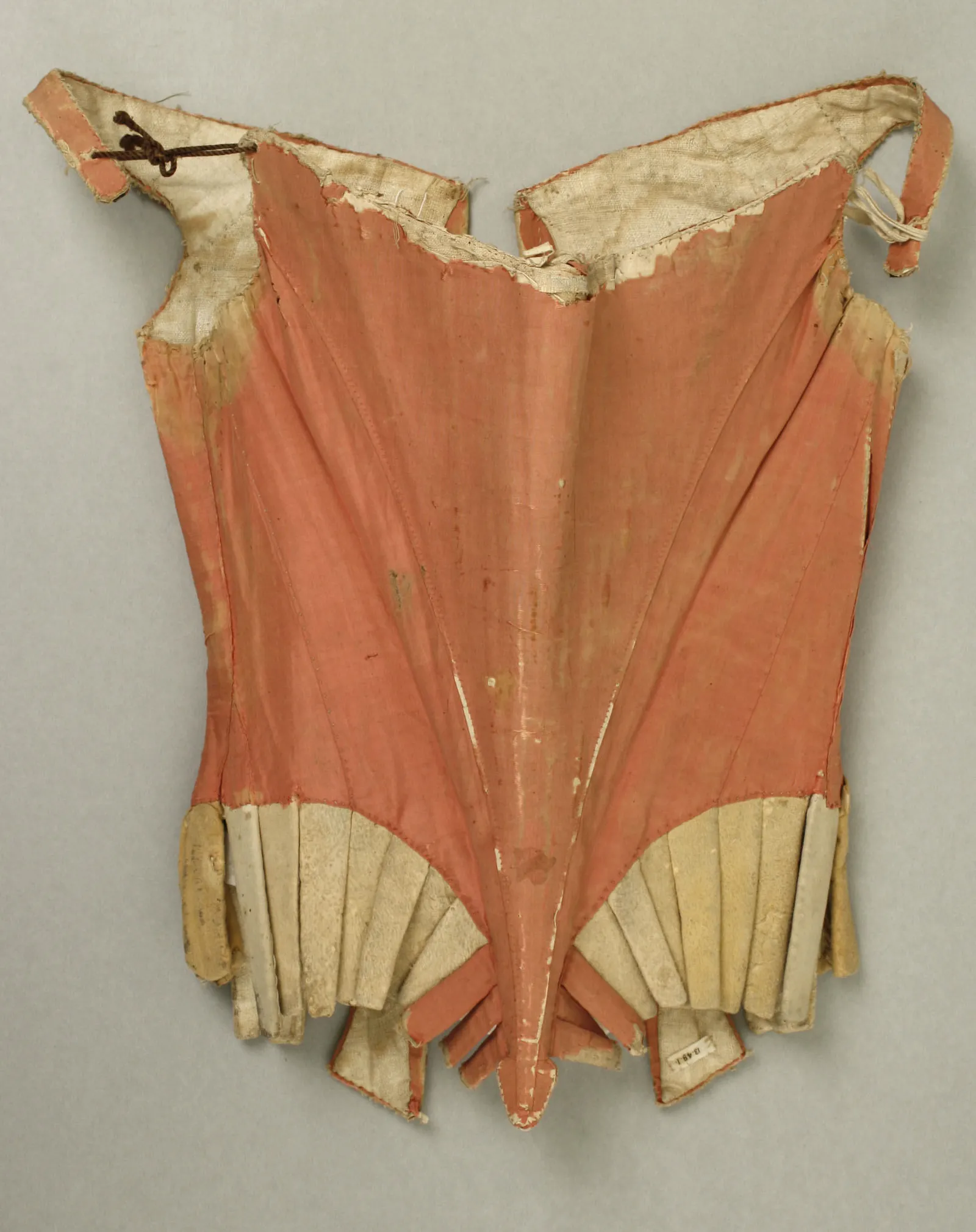
If the Middle Ages left us breast bags, the centuries that followed left us something far more solid. From the early sixteenth century, some form of stiffening had become part of how a woman’s gown was made. Sometimes it was built into the outer bodice; sometimes it was a separate garment worn underneath. In English that garment came to be called stays — because they made the body “stay” in shape.
Stiffness first, shape second
The Victoria and Albert Museum explains that stiffening began with a practical aim: to stop expensive, heavily decorated fabric from wrinkling. But because stays could mould the torso, they soon became essential for producing whatever shape was in fashion. By the seventeenth century they were a standard part of a fashionable woman’s wardrobe.
Stays were made by stitching fabric to linen in long, narrow channels, then sliding in thin strips of whalebone. Despite the name, whalebone is not bone. It is baleen — the flexible plates in the mouths of baleen whales, which filter tiny krill from seawater. Commercial whaling began in the early 1600s, and baleen went into stays, hooped petticoats, riding crops, brushes and carriage springs.
A queen’s stays
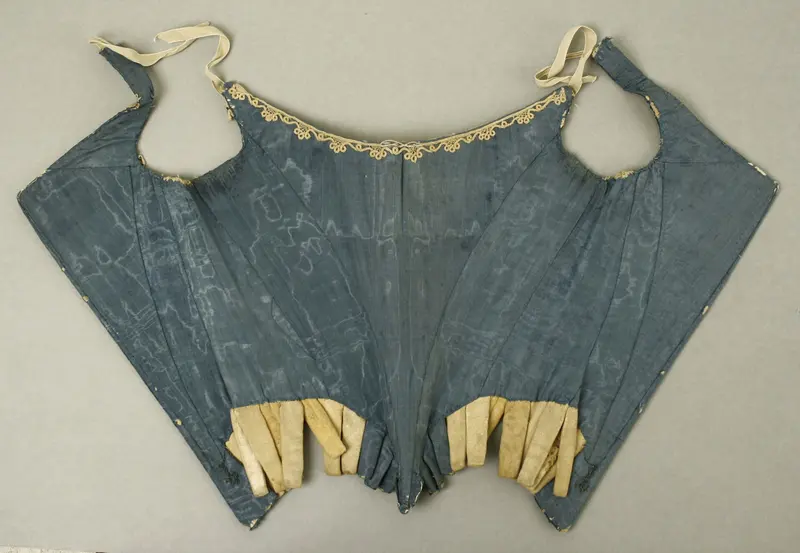
Very few early stays survive. One remarkable exception is at Westminster Abbey. Queen Elizabeth I’s funeral effigy was remade in 1760, but when it was restored in 1995, conservators found that the original corset and drawers from 1603 were still there. The corset is now displayed beside the wax effigy.
The inverted cone
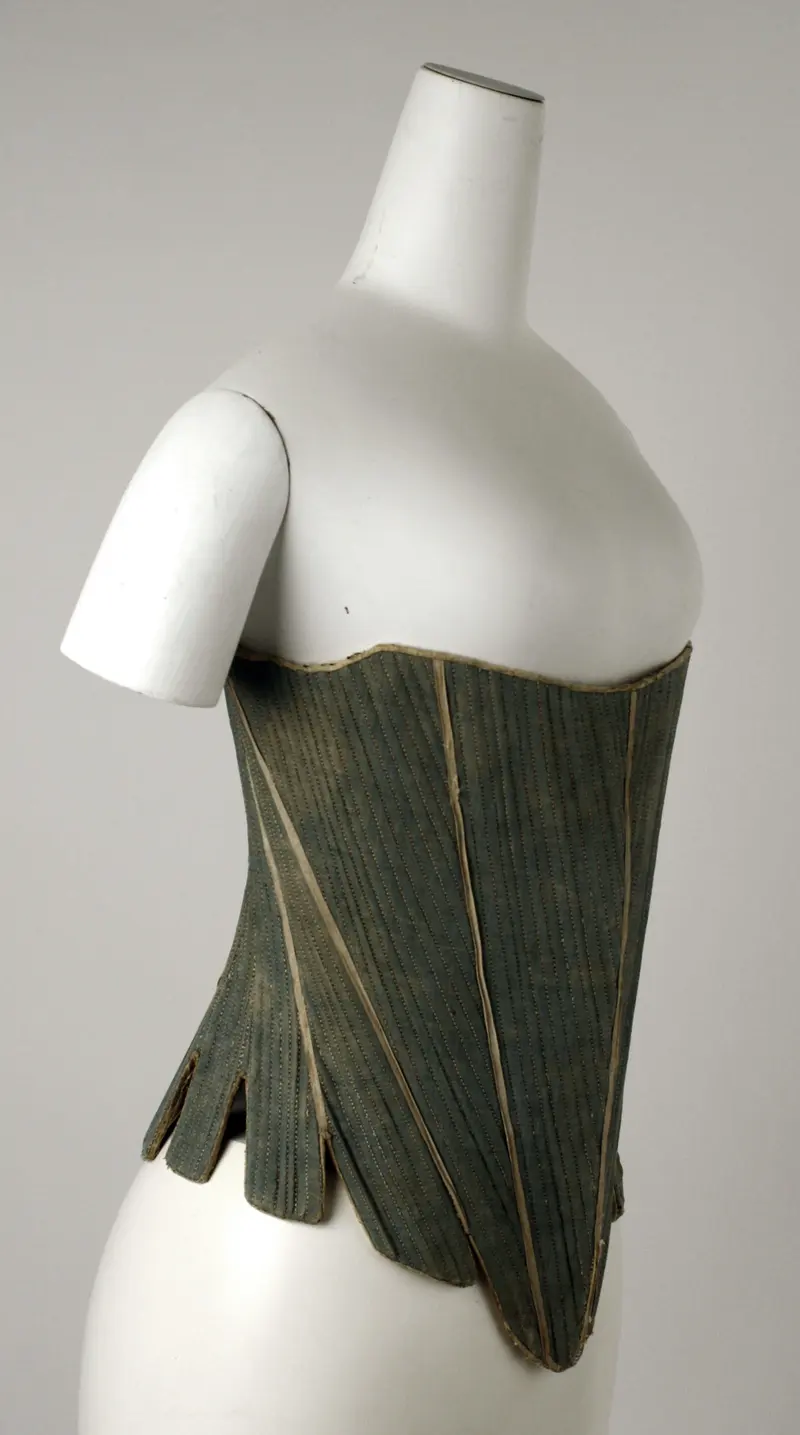
By the 1780s the fashionable torso was an inverted cone. The V&A notes that the main job of eighteenth-century stays was to give a smooth, firm outline — not to emphasise the bust or squeeze the waist. Rows of tiny, even stitches made the channels for the whalebone, and the stays laced at the back. Although they look rigid, whalebone is surprisingly flexible and softens with the warmth of the body, so stays gradually moulded to their wearer. Tabs at the lower edge splayed over the hips to give fullness to the petticoat.
From stays to “corset”
Towards the end of the eighteenth century, fashion moved to a higher waist and lighter, more classical dresses. Stays changed with it. V&A examples from around 1800 still have hip tabs, but they are cut with gussets that support the breasts — an early sign of attention to the bust itself.
The word changed too. Around this time “corset” started to be used as a more refined name for stays; The Times of 24 June 1795 reported that “corsettes about six inches long” were now the only “defensive paraphernalia” of the fashionable belle. From the 1780s more women ran their own stay- and corset-making businesses, and the newer, lighter stays with fewer bones were easier for them to make than the densely boned stays of earlier decades.
Then and now
A Georgian woman’s stays were made to measure, laced by someone else and built around a whole-torso shape. Almost none of that survives in today’s bra — except the idea, still central to good fit, that the structure around the ribcage does most of the work.