How to measure your bra size and check the fit
A step-by-step method from a major manufacturer, the checks professional fitters use, and why your size can change from brand to brand.
Updated 3 October 2026
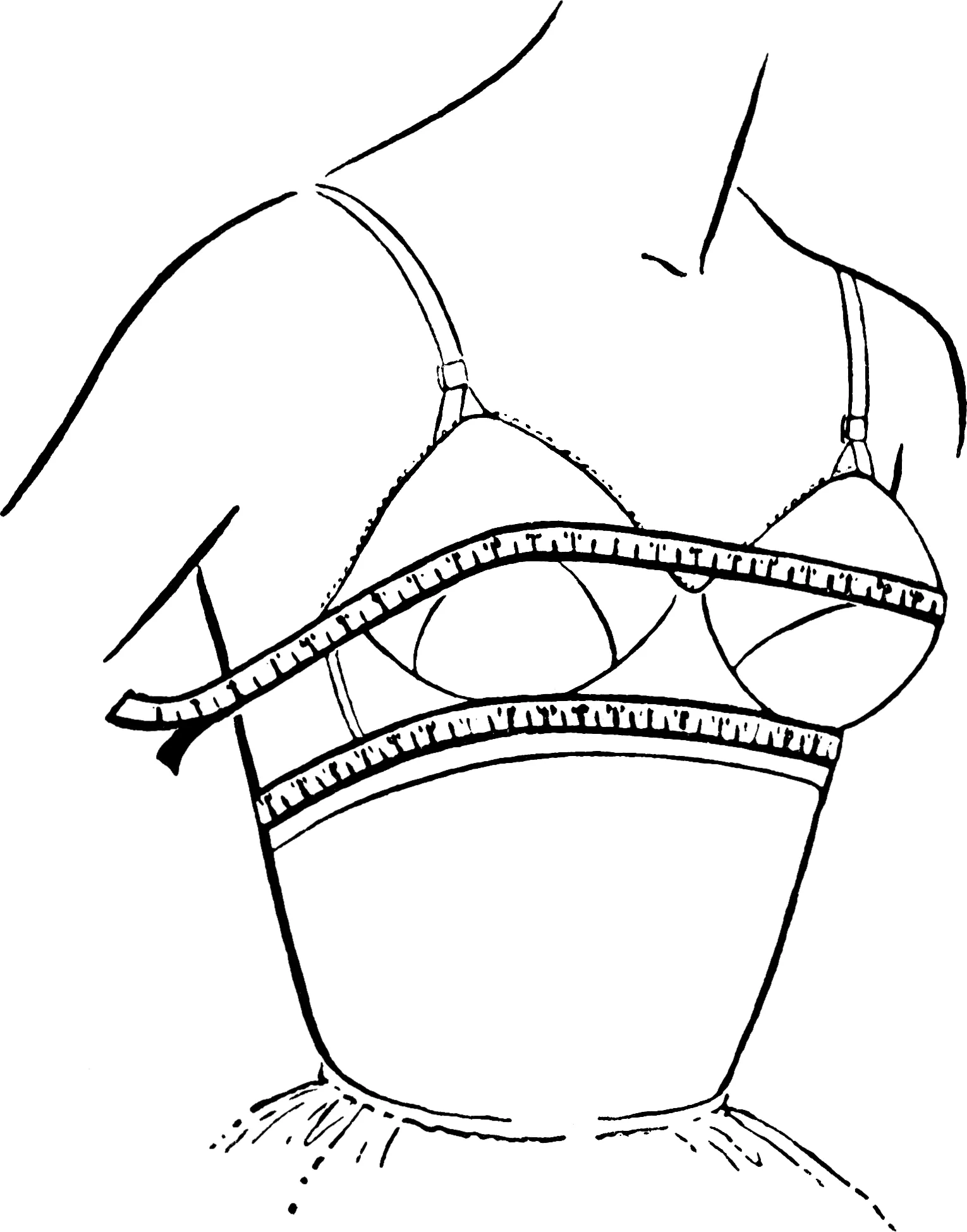
There is no single “correct” way to find your bra size, and sizes vary between brands and styles. A tape measure gives you a starting point; trying bras on — ideally with a trained fitter — tells you what actually fits.
Measuring at home
This method follows the fitting guide published by Triumph. You need a soft tape measure; take your bra off and stand up straight.
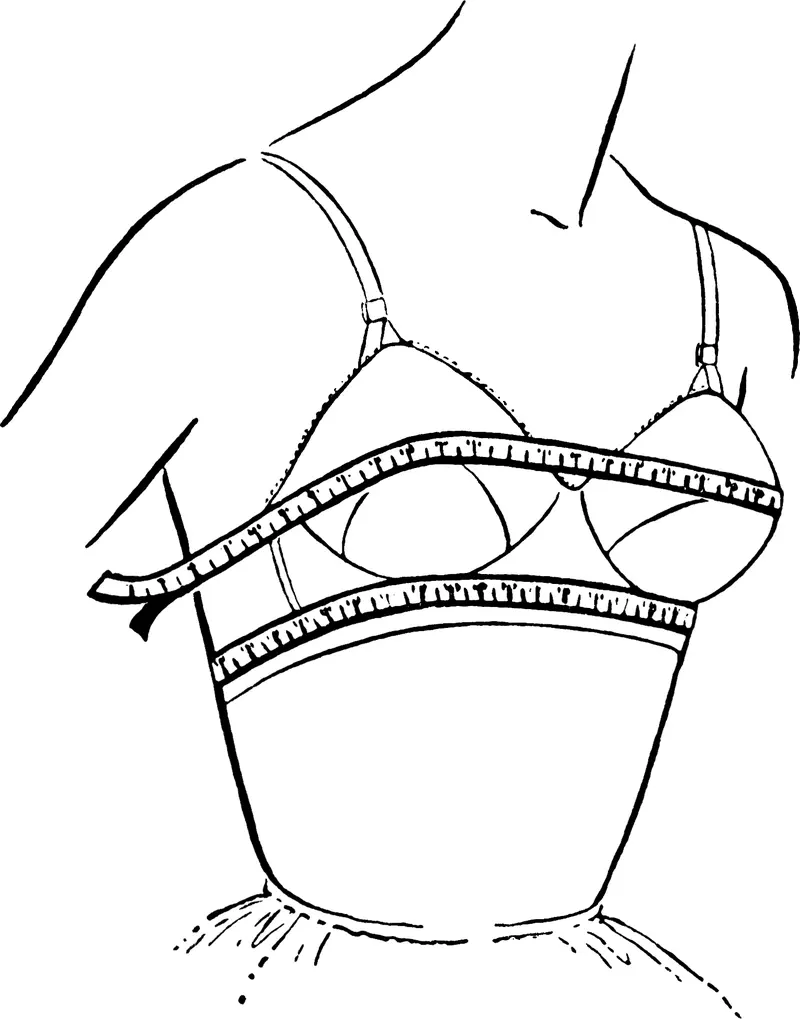
- Band. Wrap the tape snugly around your ribcage, directly under your breasts. Keep it level and breathe normally. Round to the nearest even number of inches — that is your UK band size (for example 32, 34 or 36).
- Bust. Measure around the fullest part of your bust, keeping the tape level and fairly loose so it does not compress you.
- Cup. Subtract your band size from your bust measurement. Each inch of difference is one cup size: 0 inches is AA, 1 is A, 2 is B, 3 is C, 4 is D and 5 is DD/E.
Above DD, UK sizes continue with doubled letters — E, F, FF, G, GG, H, HH, J, JJ, K and beyond. Letters don’t always match between countries, which is why international brands publish conversion charts.
Cup letters are relative to the band: a 32D can hold less than a 36B.
How it used to be done
Older advice told you to add inches to your underbust measurement. A 1958 booklet, Posture & Foundation Garments, said to measure under the bust and add 5 inches. Triumph’s method above does not add anything — one reason older and newer sizing don’t always agree.
Checking the fit
A measurement only gets you to the fitting room. These are the checks fitters use (from Triumph and Bravissimo):
- The band sits level all the way round, firm but comfortable. It provides most of the support. You should be able to slide about two fingers under it. If it rides up at the back, it is probably too big.
- The cups hold all of your breast tissue with a smooth line — no spilling over the top or sides, and no wrinkling or gaping.
- The underwires (if any) sit flat on your ribcage, around — not on — your breast tissue, and don’t poke into your armpit.
- The centre (the “gore” or bridge between the cups) lies flat against your breastbone.
- The straps stay put without digging in. If they dig, the band may not be doing enough; if they slip, try adjusting them or a style with straps set closer together.
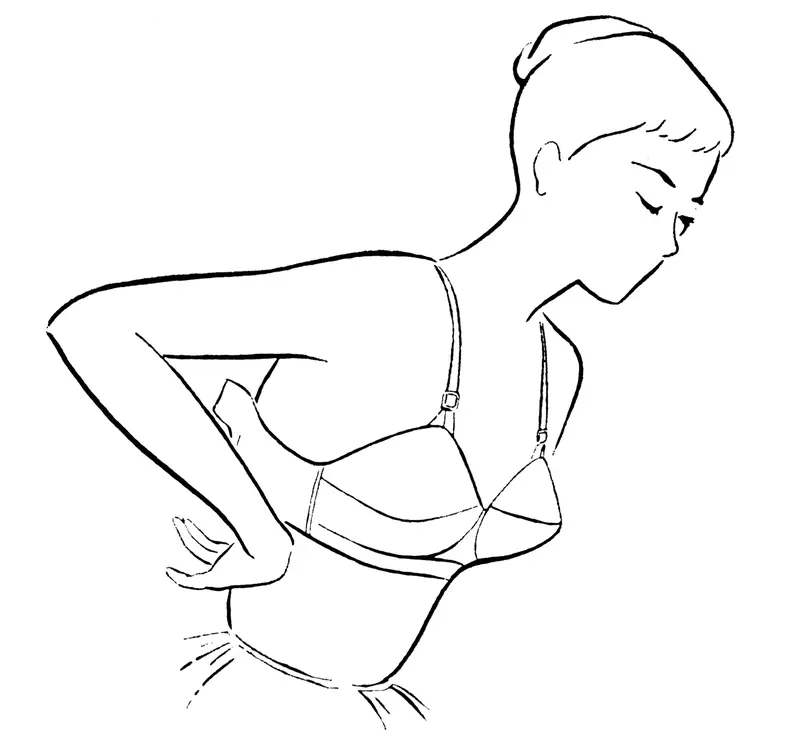
To settle into a bra, lean forward slightly and gently position your breasts in the cups before checking.
Common problems and fixes
- Band rides up or straps dig in: try a smaller band and a bigger cup.
- Breasts spill out at the top or sides: try a bigger cup.
- Cups wrinkle or gape: try a smaller cup, or a different shape such as a stretch-lace cup.
- Centre doesn’t lie flat: the band may be too loose or the cups too small.
Sister sizes
If the cups fit but the band doesn’t, try a sister size: go down a band and up a cup (or up a band and down a cup). Bravissimo’s example: 34FF has the same cup volume as 32G and 36F. Because the band does most of the work, a firmer band often feels more supportive.
Get fitted
Bodies change with weight, hormones, pregnancy, age and exercise. Bravissimo recommends a fitting every six months. Many lingerie shops and department stores offer free fittings in store or by video call, and some fitters work entirely by eye rather than with a tape. Treat any size — including the one you calculate here — as a starting point.