Sports bras by impact level
Why breast support matters for exercise, what research has found, and how to choose a sports bra for walking, the gym or a marathon.
Updated 3 October 2026
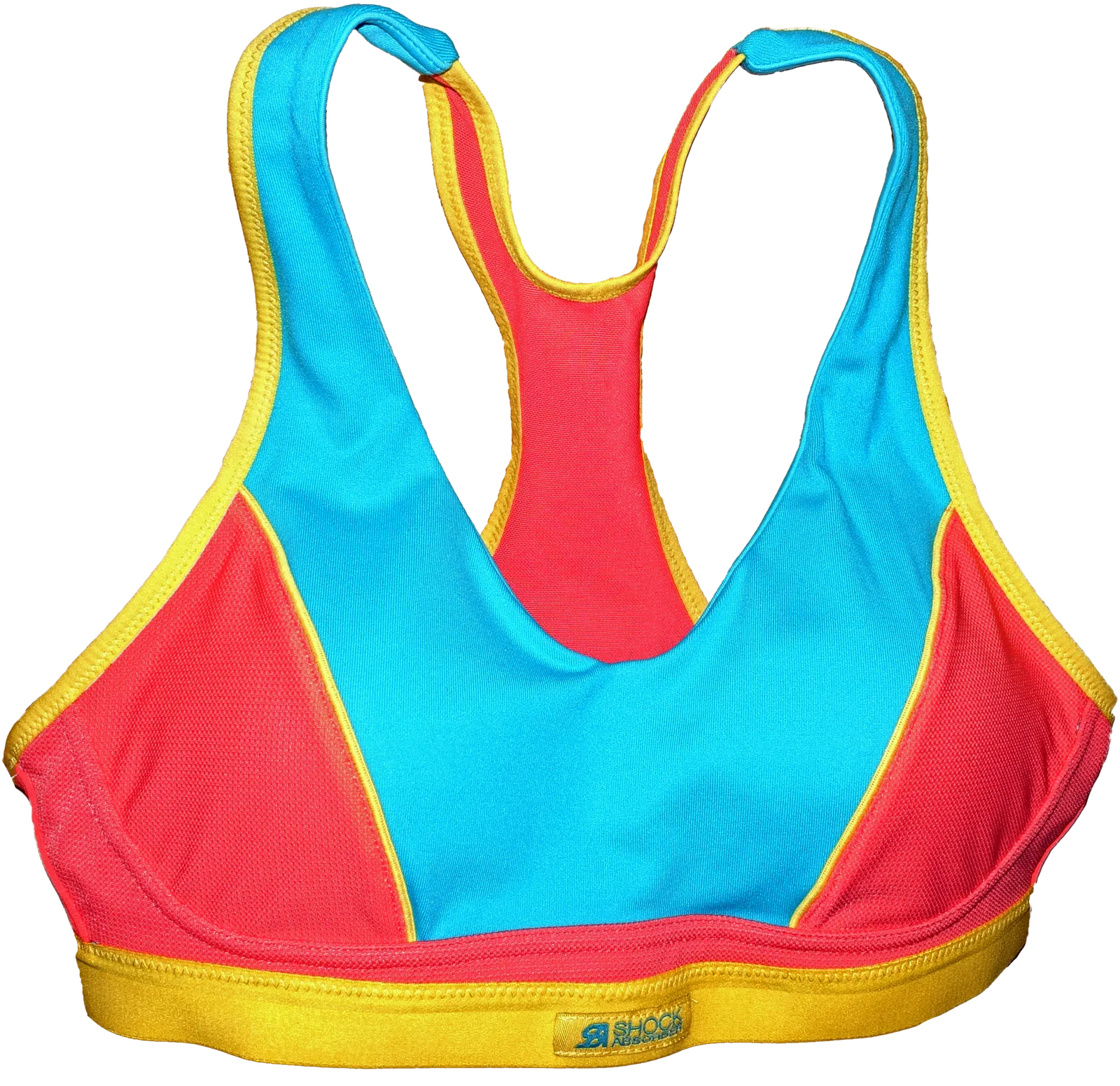
The first purpose-made sports bra was sewn together in 1977. Since then, the question of how to stop breasts moving uncomfortably during exercise has become a subject of serious research.
Why it matters
The Research Group in Breast Health at the University of Portsmouth studies breast movement in the laboratory. It reports that when women run in inadequate breast support, exercise feels harder, upper-body muscle activity increases, ground reaction forces rise and stride length shortens by about 4 cm.
Breasts can also keep people from exercising at all:
- In a survey of 249 women, the breast was a barrier to physical activity for 17% — the fourth biggest barrier, after energy, time and health. “I can’t find the right sports bra” was among the most common reasons. (Burnett, White and Scurr, 2015)
- Of 2,089 UK schoolgirls aged 11–18, 46% said their breasts affected their participation in compulsory sport and exercise, and more than half had never worn a sports bra for it. (Scurr and colleagues, 2016)
- Among 1,285 runners surveyed at the 2012 London Marathon, 75% reported bra-fit issues — most often chafing and straps digging in — and few had used a professional fitting. (Brown and colleagues, 2014)
Impact levels
Brands rate their sports bras by the kind of activity they suit, and the ratings are each maker’s own. As a rough guide:
- Low impact — Bravissimo gives yoga as an example. A softer sports bra or crop top may be enough.
- Medium impact — Shock Absorber rates its Active Classic Support as medium impact and suggests it for mat work.
- High impact — Bravissimo gives running and horse riding as examples of activities that cause a lot of bounce. Shock Absorber adds an “extreme” rating for its Ultimate Run Bra, designed for runners.
If you do a mix of activities, choose for the most demanding one.
Compression or wires?
Sports bras work by holding the breasts close to the chest. Non-wired styles usually use firm, low-stretch fabric and work by compression. Underwired sports bras give more structure and a more defined, separated shape, which some people find more secure. Racerback straps — or a clip that converts straps to a racerback — can feel more stable.
How a sports bra should fit
Expect the band to feel a little firmer than an everyday bra, but it should still be comfortable enough to wear all day. Sports bras usually have wider back bands, thicker straps and more coverage. Some brands say particular styles come up small and suggest trying a band size up — check the brand’s advice.
Before you commit, try the “jump test”: jump, jog on the spot or do some high knees in the changing room and see how secure you feel.
Look after it
Elastane — the stretch fibre in most sports bras — doesn’t like heat. Wash sports bras gently and keep them out of the tumble dryer: see our care guide.