History Chapter V
Cups, sizes and stretch
1929 – 1939
In one decade the bra gained separate cups, stretch yarns, underwires, adjustable straps and — most importantly for fit — cup sizes.
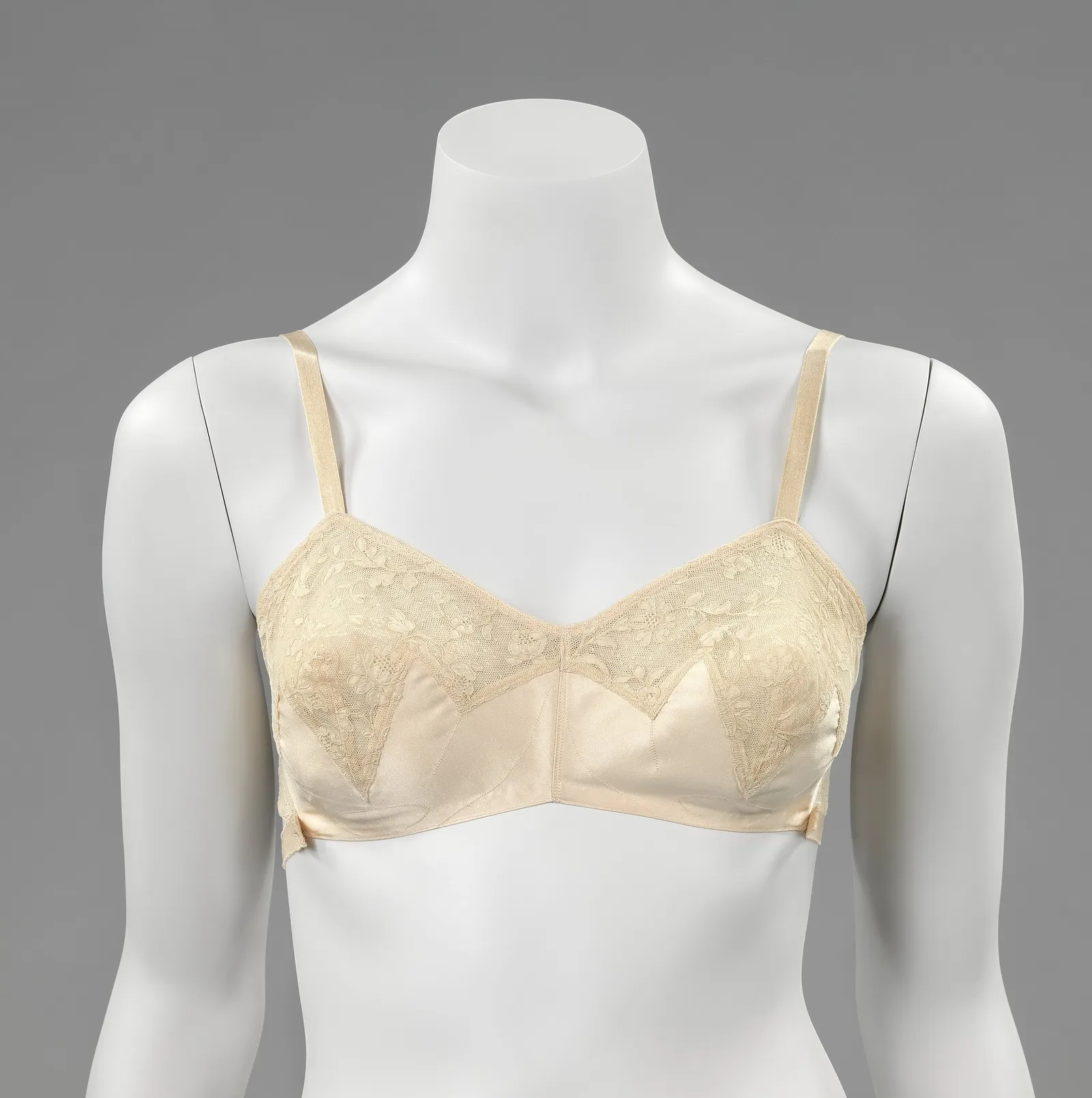
The 1930s turned the brassiere from a band into a fitted garment. Fashion wanted a lifted, more natural bust again, and manufacturers had new tools to give it.
Separate cups and stretch
Separate cups, introduced in the late 1920s, gave more support and lift, and cup construction grew more complicated over the following decades. The Underpinnings Museum dates the first stretch yarn, Lastex, to 1929. Woven or knitted into one- or two-way stretch fabric, it was lighter and more porous than rubber, kept its shape through washing — and meant that women whose measurements fell between standard sizes could finally be accommodated.
Straps were rethought as well. Fully elastic shoulder straps were tried in the UK in the mid-1930s, but early elastic stretched too much to support well. A short section of elastic joining ribbon or fabric straps proved more popular, and adjustable ribbon straps became more common at the end of the decade.
Adjusting the fit
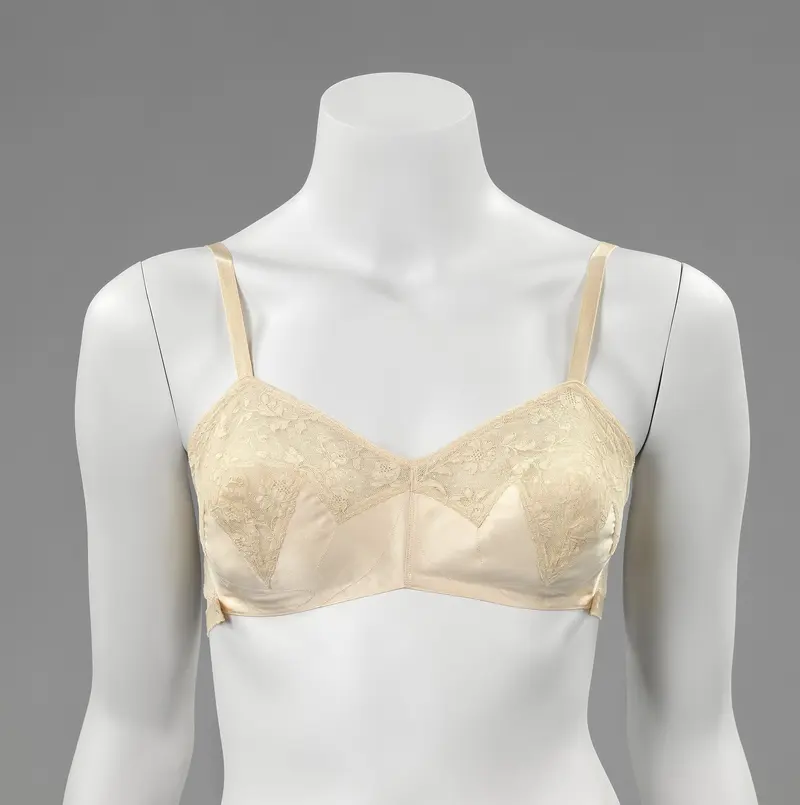
Before hooks with several rows became standard, makers found other ways to let a bra be loosened or tightened. A pink silk-net brassiere of the 1930s in the V&A fastens at the centre back with small pearl buttons — with two rows “to permit size adjustment”.
Wires
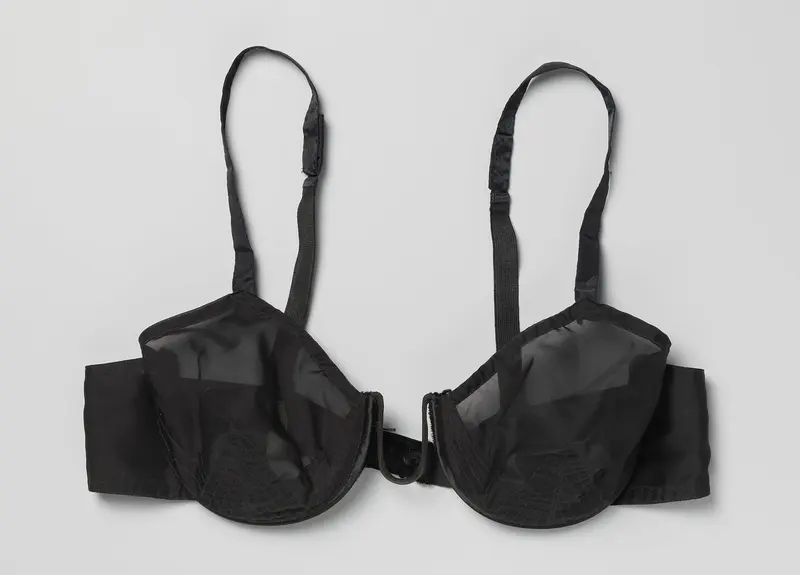
Underwires are older than many people think. According to the Underpinnings Museum, the first commercially produced underwired bra went on sale in America in 1931, and the first “overwired” strapless bra appeared in 1934. Early wires could be very uncomfortable and could work their way out through the fabric, so the inside was often padded or covered with velvet where the wire touched the skin. In the UK, wiring only became common after the Second World War, partly because metal was scarce during the conflict.
The arrival of cup sizes
The museum calls graded cup sizes perhaps the most important development for bra fit: until then, manufacturers had no way to tell chest size from breast volume. Who came first is disputed:
- According to Farrell-Beck and Gau’s Uplift: The Bra in America, the Formfit Company announced three cup volumes — “small”, “average” and “full” — in each band size in 1932.
- The same authors say S. H. Camp and Company pioneered relating the breasts to letters of the alphabet, A to D, and that Warner did not offer cup sizing until 1937.
- Other historians credit Warner with introducing A, B, C and D cups in 1935.
Britain was slower. Many UK manufacturers and retailers were still labelling cups “medium” or “average” in the late 1950s.
Stitching a shape
In 1935 Joseph R. Bowen, founder of Hollywood-Maxwell, patented a way of stabilising cups he called “Whirlpool” stitching: concentric rings of stitches that gave a rounded shape in the 1930s — and, pushed further, the pointed cups of the 1940s and 1950s.